
E8: Football Stadium Villages
A closer look at 3 Multifamily Housing Developments Coming Soon
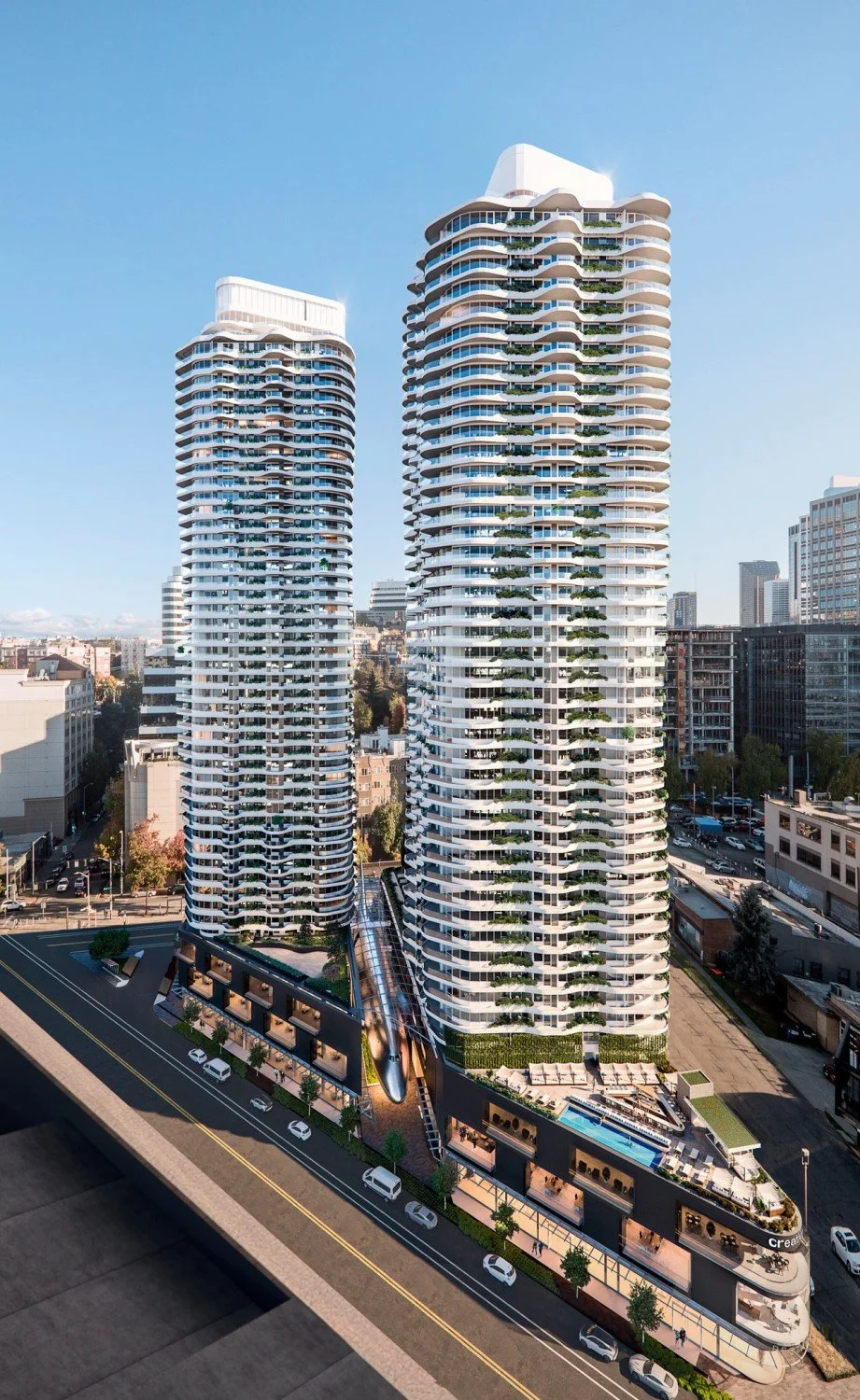
WB1200 Seattle, Washington
With Super Bowl Sunday coming up, it only seems fitting that we take a look at some upcoming large-scale housing that will follow these stadium rehabilitations or rebuilds throughout the US. When visiting a football stadium, in order for the city to see some revenue, the infrastructure needs to be conducive.
Not to take sides or anything of that nature, the perfect example of this type of stadium, nailing the idea of walkability around a stadium, is none other than the Seattle Seahawks.
Lumen Field has been consistently ranked as the most walkable NFL stadium in the US. It is situated just south of downtown Seattle, but offers numerous hotels, restaurants, nightlife, and cultural sports all within walking distance, especially around the International District and Pioneer Square. Excellent public transit options also mean you don't need a car. What this means is that this stadium will be a true city game-day experience with plenty to do before and after the match.
A newer development shown below, dubbed WB1200, is situated in Denny Triangle. This development is comprised of two 47-story residential towers and will have more than 1,000 units.
Developer: Westbank Corp
Architect: Henriquez Partners Architects
GC: Graham Construction a 3G Company , Icon West, Inc. , and JTM Construction
Upcoming football stadium conversions or rebuilds are going to bring some monster multifamily projects their way.
Washington Commanders. New RFK Stadium + Mixed Use Neighborhood in DC.
A brand-new 65,000-seat NFL stadium is being built on the site of the old RFK Stadium as part of a major mixed-use urban redevelopment project.
The surrounding neighborhood plans to include 5,000-6,000 housing units (mix of apartments and homes) alongside retail, parks, entertainment, and more, essentially a new urban district. The multifamily aspect is expected to include at least 30% affordable housing for the area.
This is approved, and groundbreaking is set for 2026, with phased delivery through 2030+.
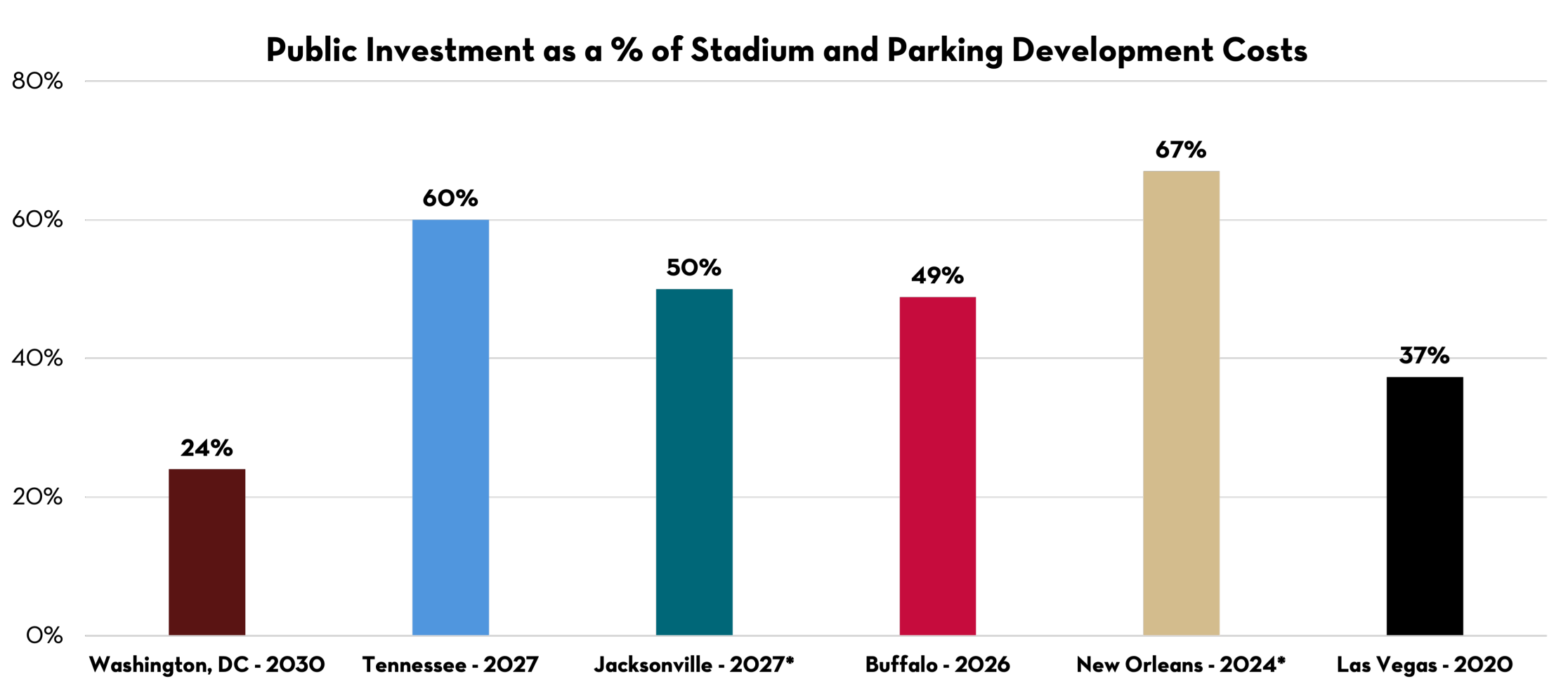
This new development will be the single-largest private investment in DC's history, at $2.7 billion. According to other recent football stadiums built with public investment, DC is getting an incredible deal at 24% as seen below.
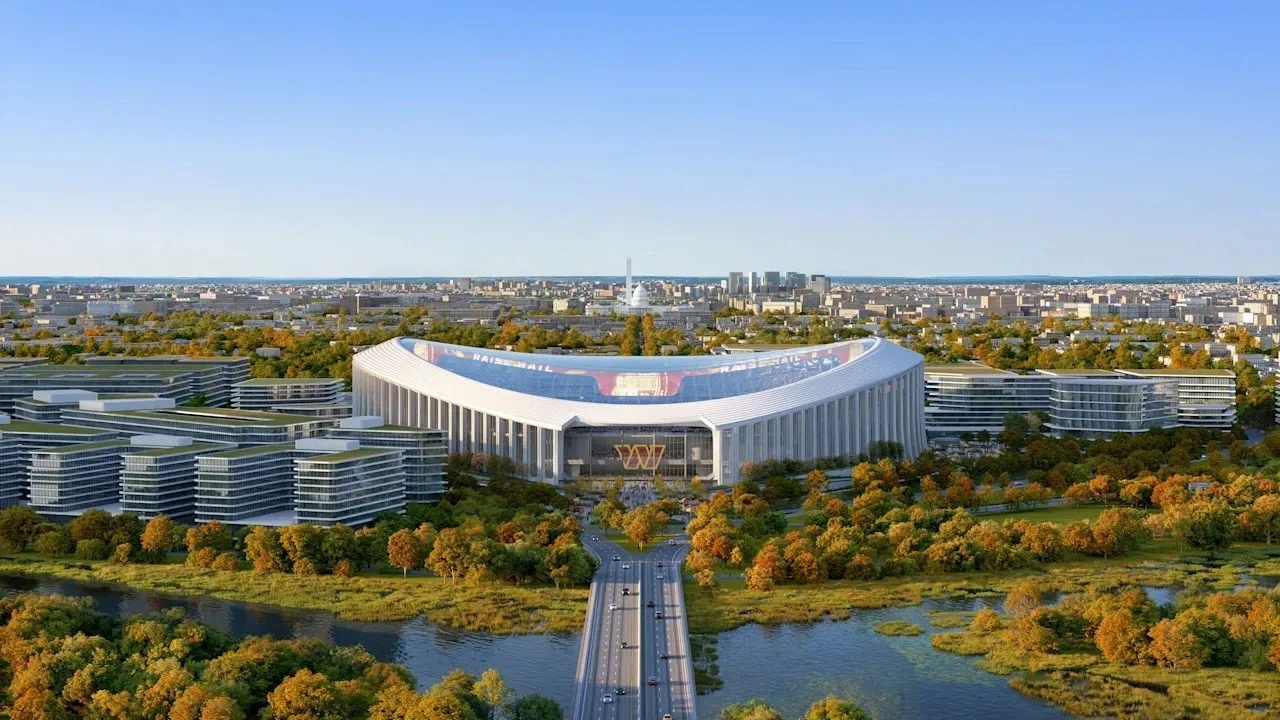
Future home of Washington Commanders, rendering
Developer: Washington Commanders Organization
Architect: HKS, Inc
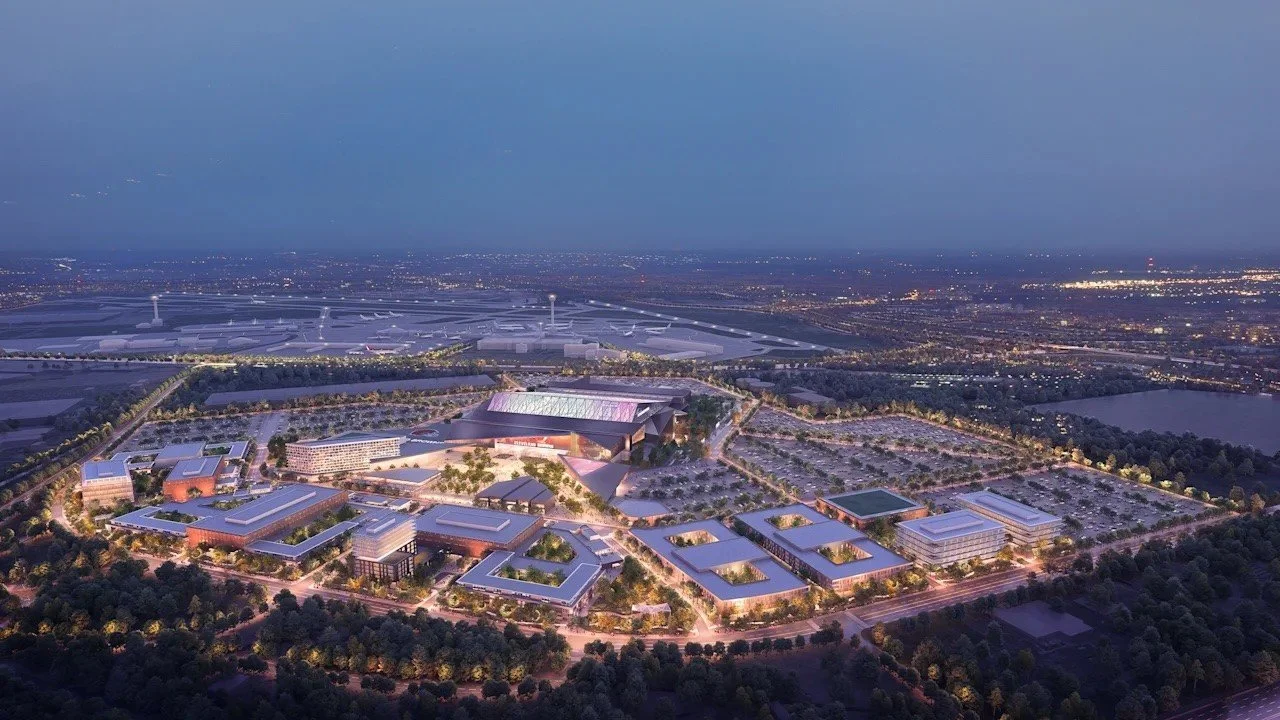
Cleveland Browns- Brook Park Stadium & Mixed Use District (Ohio)
The Haslam-led Brook Park plan concerts airport-adjacent land into a full stadium district, including apartments, hotels retail, and office. This is a textbook example of the "stadium as anchor tenant" model for housing absorption.
The development is part of a larger plan to move away from the downtown lakefront to a new suburban campus and will be focusing on a "work-live-play" environment, designed to complement a new $1B+ enclosed stadium.
Phase One, is planned to deliver along with the stadium in 2029, 450 hotel rooms; 575 apartments, 96,000 square feet of traditional retail and 137,000 square feet of experiential retail, which will include a team store and other experience-based retail concepts that will drive year-round activation and community involvement.
Developer: Lincoln Property Company & Haslam Sports Group
Architect: HKS, Inc
Chicago Bears — Stadium Location Crossroads (Illinois / Indiana)
Being from Chicago, this one hits differently. Much like this past season, the Bears’ stadium search has kept fans in a state of controlled chaos — flashes of promise, long pauses, and plenty of heart-rate spikes. Heart Attack Bears, indeed.
Unlike many NFL markets with a single, clear path forward, the Bears’ future appears narrowed to three distinct location strategies, each with very different development implications:
Remain in Chicago, near Soldier Field
Move to a suburban, master-planned campus
Relocate across state lines to Northwest Indiana
Each option represents a fundamentally different take on how an NFL stadium can anchor housing, hospitality, and year-round activation.
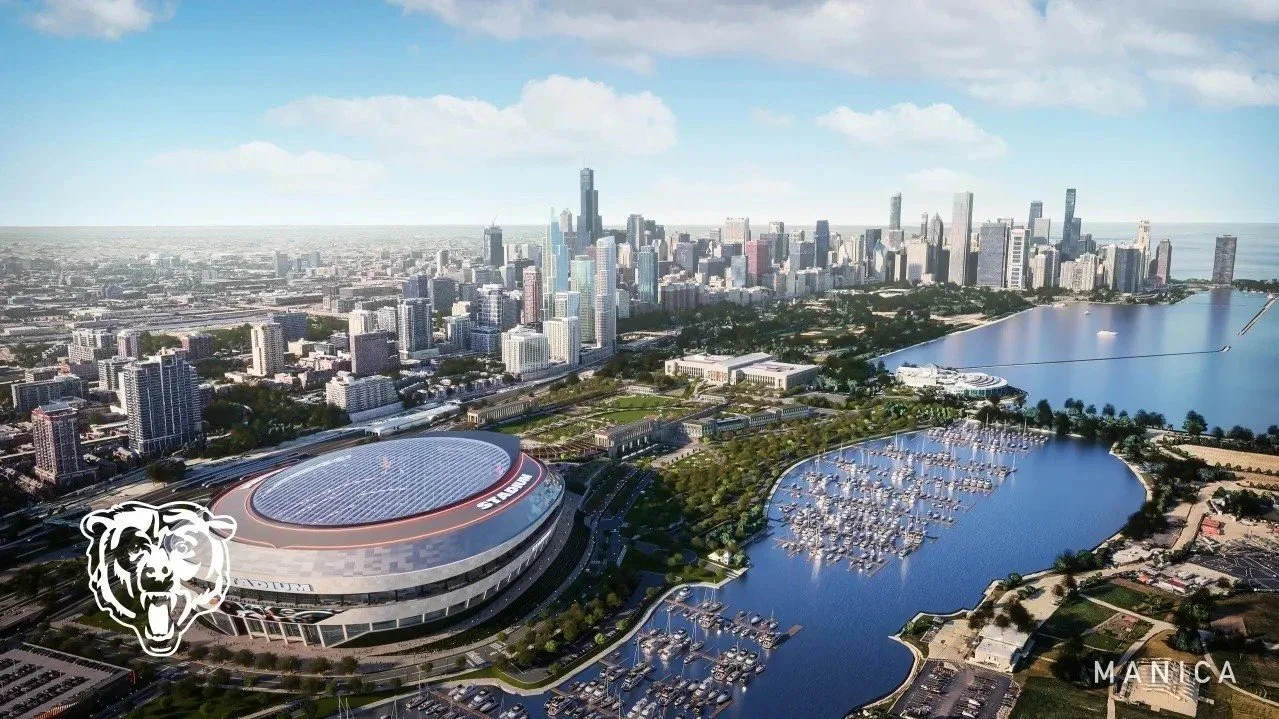
Rendering by Manica
Option 1: Stay in Chicago — Lakefront / Soldier Field Area
If the Bears remain near their current home, the focus shifts to urban infill and adjacency, not land control. Early concepts envision a new enclosed stadium near Soldier Field, leveraging existing downtown hotels, transit, and tourism infrastructure rather than building a standalone district from scratch.
From a development standpoint, this is less about creating new apartments on site and more about intensifying demand for nearby multifamily, hospitality, and retail in the South Loop, Near South Side, and Museum Campus areas. The upside is immediate walkability, transit access, and brand alignment with the city core; the challenge is limited acreage and complex public approvals.
This approach mirrors a “stadium as economic accelerator” model rather than a traditional mixed-use campus.
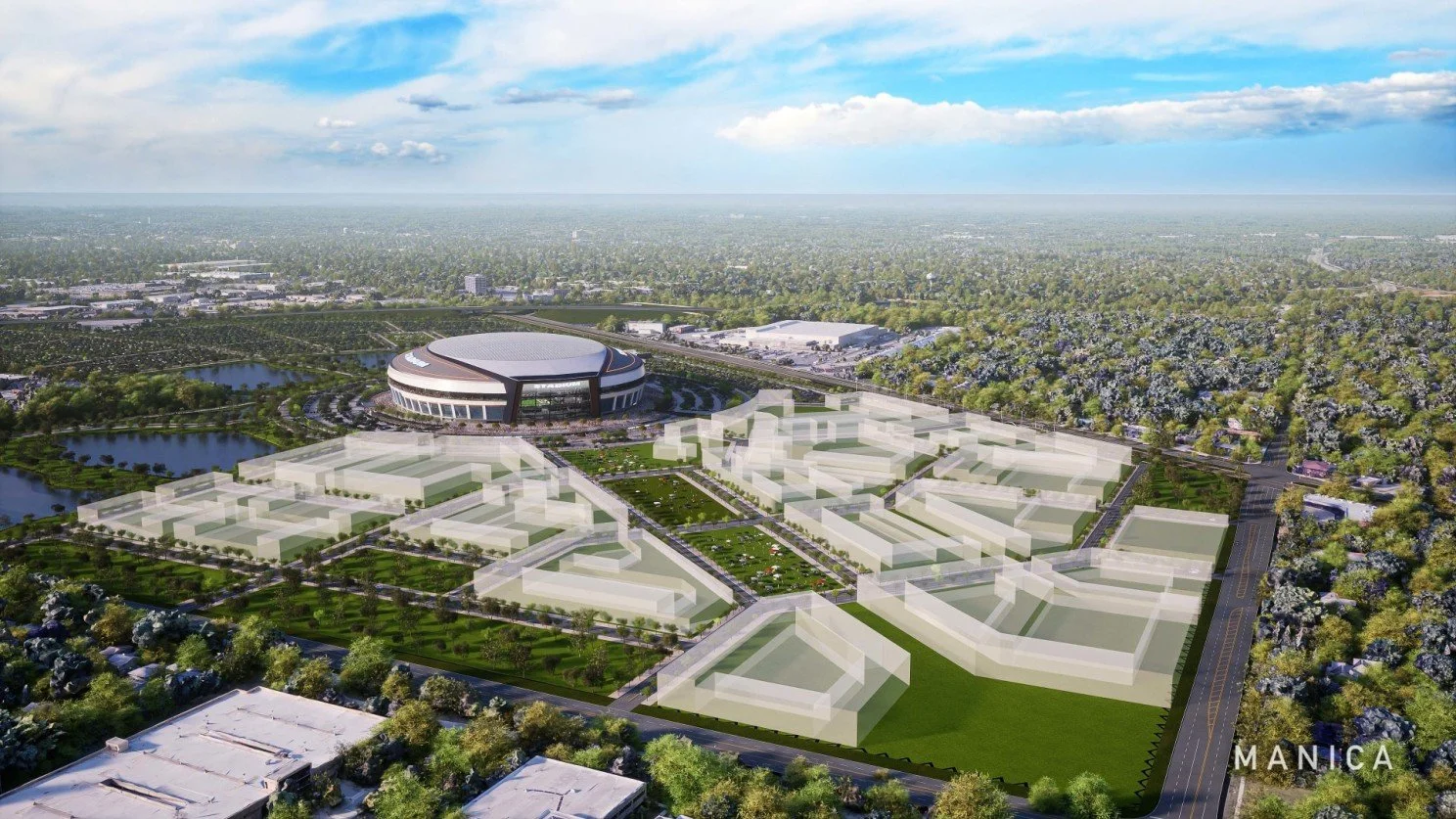
Rendering by Manica
Option 2: Arlington Heights — Suburban Stadium & Mixed-Use Campus
The Arlington Heights site represents the most Brook Park-like option on the table. The Bears already control roughly 326 acres at the former Arlington International Racecourse, allowing for a true master-planned, work-live-play environment built around a new enclosed stadium.
Early concepts have included:
Multifamily and potentially for-sale residential
Hotels and conference uses
Retail, entertainment, and team-branded experiences
Structured parking and transit upgrades
This is a classic “stadium as anchor tenant” strategy, where residential absorption, hotel demand, and experiential retail are driven by both game days and year-round programming. From a development lens, Arlington Heights offers scale, flexibility, and phasing potential that the city simply cannot
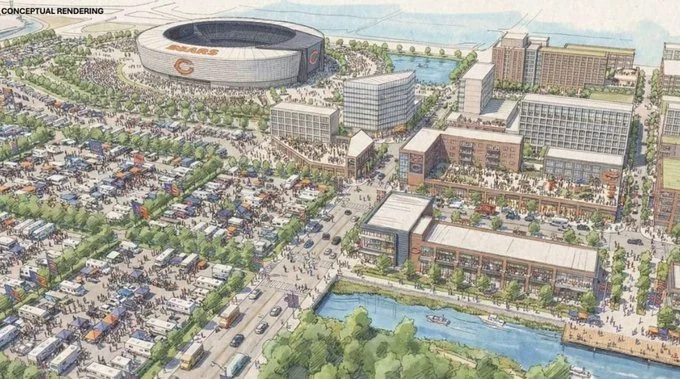
Gary.gov
Option 3: Gary / Northwest Indiana — Cross-State Opportunity
Northwest Indiana — particularly Gary — has aggressively positioned itself as an alternative, offering land availability, incentives, and a willingness to build a new stadium district from the ground up.
Conceptual plans shared by Indiana officials suggest a mixed-use environment that would include:
Apartments and workforce housing
Hotels and destination retail
Entertainment-driven commercial space
Regional transit connectivity
While this option carries the highest political and emotional lift, it also presents the greatest opportunity for transformational redevelopment, where the stadium could act as a catalyst for long-term regional reinvestment
Big Picture Takeaway
No matter where the Bears land, the outcome will be far more than a football stadium. Each scenario brings meaningful downstream impacts for:
Multifamily housing demand
Hotel development
Experiential and traditional retail
Long-term tax base growth
And because I’m trying (and mostly failing) to keep this newsletter neutral, I’ll stop short of taking sides. …Okay, fine. I hope they stay in the city, close to where they belong. Sorry. Not sorry. 🐻⬇️
Until the next door opens,
Tracy