As we head into the ending of 2025, the landscape of Low-Income Housing Tax Credit (LIHTC) allocations has taking shape—and it’s clear that this year was defined by aggressive population-driven demand, record construction needs, and intensified competition for credits in major growth markets. For developers, architects, and investors, understanding where the largest allocations fall is essential for planning pipeline strategy, site selection, and capital stacking.
This year, California, Texas, Florida, and New York once again emerge as the top four states in total LIHTC funding—each for very different reasons tied to policy, population pressures, and housing supply gaps.
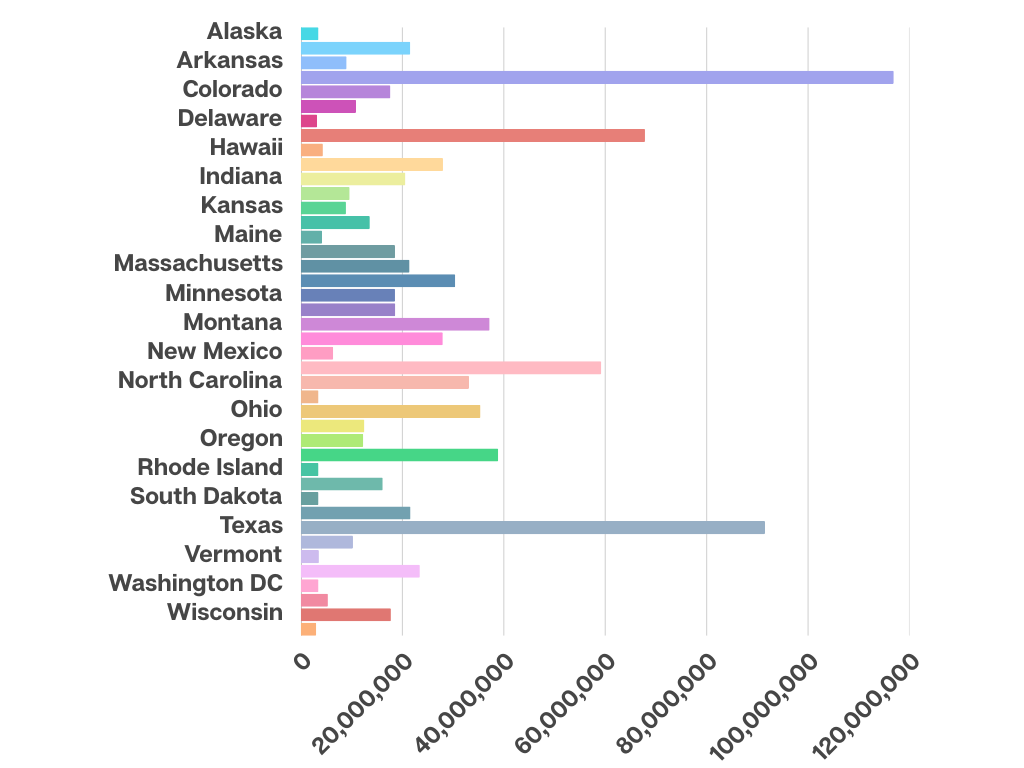
🔥 2025 LIHTC Leaders: The Top Four States Driving Multifamily Development
1. California — The Perennial Powerhouse
California continues to dominate LIHTC allocations due to its large population, high cost-of-living metrics, and persistent affordability challenges. In 2025, the state is channeling allocations toward:
High-density urban infill (LA, Bay Area, San Diego)
Adaptive reuse in downtown corridors
Mixed-income developments designed to preserve middle-income affordability
Regulatory reforms around CEQA streamlining and more aggressive local incentive overlays mean developers entering the market in 2025 will face a slightly smoother—but still complex—path to entitlement.
2. Texas — Fastest-Growing Demand for Affordable Housing
With sustained in-migration and some of the fastest-growing metros in the country (Austin, Dallas, Houston, San Antonio), Texas is experiencing heavy strain on both market-rate and affordable housing stock. 2025 allocations reflect:
A push toward suburban LIHTC projects in fast-growing corridors
Emphasis on energy-efficient design for extreme heat resiliency
A competitive scoring environment where community support is more important than ever
Developers should prepare for record application volume, especially in Qualified Census Tracts.
3. Florida — Storm-Resilient, Workforce-Focused Development
Florida’s LIHTC strategy continues to evolve around climate resiliency and workforce housing, particularly in service-industry-heavy metros like Orlando, Tampa, and Miami. Expect allocations to emphasize:
Elevated construction standards and resiliency requirements
Post-disaster rebuilding credit distribution
Housing for service workers in tourism-driven economies
With insurance costs climbing, 2025 projects will require tighter pro formas and strong design-engineering integration early in the process.
4. New York — Preservation and Transit-Oriented Priorities
New York’s LIHTC allocations remain centered on:
Preservation of aging multifamily housing stock
Transit-oriented development in NYC, Long Island, and the Hudson Valley
Deep affordability thresholds paired with multi-layered financing
For developers, expect longer approval timelines but stronger preservation-oriented scoring priorities.
✅ How to Position Your LIHTC Project for Approval — Tips & Best Practices
Given the competitive nature of LIHTC (especially in major states), here are some practical, data-backed strategies for improving your odds of approval:
Understand and Align With Your State’s QAP
Design for Longevity & Efficiency
Leverage Preservation Where Possible
Build Strong Partnerships Early
Model Your Financing Carefully
Submit a Competitive Application Package
Stay Current on Policy & Funding Trends

To better understand how architects are adapting to these new demands, I sat down with a leading architect based in Washington, D.C., who works extensively on LIHTC and mixed-income developments. Jack Devilbiss, AIA, LEED AP is an Associate Partner at Bonstra Haresign Architects and is no stranger to these types of LIHTC developments. His insights shed light on design, accessibility, suggestions for design success and suggestions on his ideas for changes to policy to accommodate these developments. This interview offers a ground-level look at how design professionals are navigating shifting regulations—and how developers can set their projects up for success from day one. At Landquist & Son, we have worked with Jack Devilbiss on numerous projects in and around Washington DC with our durable Magiglide closet doors over the years.
What makes designing LIHTC projects different from market-rate multifamily developments?
Jack Devilbiss: “LIHTC-financed projects require compliance with a specific set of standards that go beyond the minimum Building Code and Zoning regulations that apply to both LIHTC and market-rate developments. These LIHTC standards are issued by each state’s Department of Housing and Community Development.
Many of these requirements align with broader state initiatives such as energy efficiency, solar integration, and net-zero greenhouse gas emissions.
While both LIHTC and market-rate projects incorporate contemporary design and technology, LIHTC developments must also meet — and often exceed — the DHCD design criteria. That additional layer shapes nearly every design decision from early concepts to construction.”
How does accessibility and universal design factor into your LIHTC projects?
Jack Devilbiss: “Accessibility and universal design factor more consistently into LIHTC-financed projects. Individual states often mandate stricter accessibility standards for LIHTC developments that don’t apply to market-rate projects.
For competitive 9% LIHTC applications, developers may voluntarily pursue an even higher degree of accessibility to strengthen scoring.
Our approach at Bonstra | Haresign is consistent for both market-rate and affordable projects: accessibility should be integrated seamlessly into the overall aesthetic and function. It should feel natural, beautiful, and intentional.”
What changes in LIHTC policy or administration would make the biggest difference for architects?
Jack Devilbiss: “One of the greatest challenges for architects is interpreting the legislated standards.
A dedicated Design and Engineering Guide — published by the same entity producing the Qualified Allocation Plan, Rental Financing Guides, and Contract Procedure Guides — would significantly improve the process.
Such a guide would allow architects and engineers to spend more time on design quality rather than navigating lengthy legislation written largely for financing and rental compliance.
Given the tight deadlines for LIHTC applications, having a centralized and design-focused resource would streamline the entire workflow.”
What advice would you share with architects new to LIHTC projects?
Jack Devilbiss: “There is an entire field of consultants who specialize in tax credit financing — including Historic Tax Credits, LIHTC, New Market Credits, Passive Energy Credits, and many others.
Introducing your client to these consultants early can dramatically improve both strategy and coordination. They understand the hurdles and opportunities and can guide both the client and the design team toward a successful application.
It ultimately leads to a more efficient partnership between consultants, architects, and owners.”
What design element best represents dignity and pride in affordable housing?
Jack Devilbiss: “A full partnership between high-quality design and high-quality construction.
The best design can only succeed when supported by strong contractor selection, thoughtful bidding, and a well-managed construction process.
The Owner must articulate clear goals; the Architect and Engineers must produce a researched, detailed, and precise set of drawings and specifications; and the Contractor must execute that design with skill and proper supervision.
When these three partners are aligned from the beginning, the result is a building that residents, owners, and the surrounding community can take genuine pride in.
…and yes — that includes high-quality, attractive, durable, and efficient closet doors and storage systems.”
💡Magiglide Insight: Why We're Tracking This
At Magiglide, we follow LIHTC trends closely because the affordable housing community is one of the most resourceful, solution-oriented industries in real estate. Every design decision—down to hardware, materials, and accessibility—plays a role in a project’s long-term sustainability and compliance.
If your team is preparing a submittal for 2026 or planning an early-stage feasibility review, we’re always happy to connect you with design partners, door solutions, and project insights that streamline approvals and keep units on track.
See below for a state by state link to their Qualified Allocation Plan for 2026 that defines how these credits are awarded if they have them by state as of today's date.
November 21, 2025.
Alabama- Final QAP ✅
Alaska- Draft. - Change Summary
Arizona- 2026 and 2027 QAP 2nd draft
Arkansas- Final QAP ✅
California- QAP changes and notices for 2026
Colorado- Final QAP ✅
Connecticut- Final QAP ✅
Delaware- Final QAP ✅
District of Columbia- 2023's Final QAP ✅
Florida- Final QAP ✅
Georgia- Draft 3
Hawaii- Final QAP ✅
Idaho- 2025's approved plan
Illinois- Final QAP ✅
Indiana- Final QAP ✅
Iowa- Final QAP ✅
Kansas- Draft
Kentucky- Final QAP ✅
Louisiana- Draft
Maine- Final QAP ✅
Maryland- 2025 QAP
Massachusetts- Draft
Michigan- Final QAP ✅
Minnesota- Final QAP ✅
Mississippi- 2025 QAP
Missouri- Final QAP ✅
Montana- Final QAP ✅
Nebraska- Final QAP ✅
Nevada- 2025 QAP
New Hampshire- Final QAP ✅
New Jersey- 2024 QAP
New Mexico- 2025 QAP
New York- 2025 QAP's
North Carolina- Draft
North Dakota- Final QAP ✅
Ohio- Final QAP ✅
Oklahoma- Final QAP ✅
Oregon- 2025 QAP
Pennsylvania- Final QAP ✅
Rhode Island- Final QAP ✅
South Carolina- Draft
South Dakota- 2025 QAP
Tennessee- Final QAP ✅
Texas- 2025 QAP
Utah- Draft
Vermont- Final QAP ✅
Virginia- 2025 QAP
Washington- Final QAP ✅
West Virginia- 2025 QAP
Wisconsin- Final QAP ✅
Wyoming- Final QAP ✅
Until the next door opens,
Tracy
Website: Magiglide Closet Systems