
E2: Rezoning
You’ve seen the headlines: housing shortages, affordability crises, stalled projects. But behind the noise, zoning reform is quietly opening the door to new deals and faster approvals.
Living in a suburb on the south side of Chicago, I have seen these changes firsthand in our city. The first step in multifamily developments to become a go, are to rezone those areas that are initially set to be only single family homes. These almost silent changes nationwide, are opening the door for Multifamily Housing Developers to spread urbanism into areas that were not possible before.
Across the country, cities are quietly rewriting the playbook for housing. What used to be single-family-only streets are opening up to duplexes, townhomes, and mid-rise apartments. Parking minimums are being reduced. Density caps are being lifted. And for developers willing to move early, new opportunity zones are emerging almost overnight.
This wave of rezoning isn’t just policy reform — it’s reshaping the economics of development. Markets once considered “built out” are suddenly viable again, and projects that stalled under outdated zoning now have a path forward.
In this edition, we break down where zoning reform is unlocking new potential and which cities are leading the way toward a more flexible, housing-focused future. Make note, that the following reforms are all enacted in 2025.
West (California, Arizona, Colorado
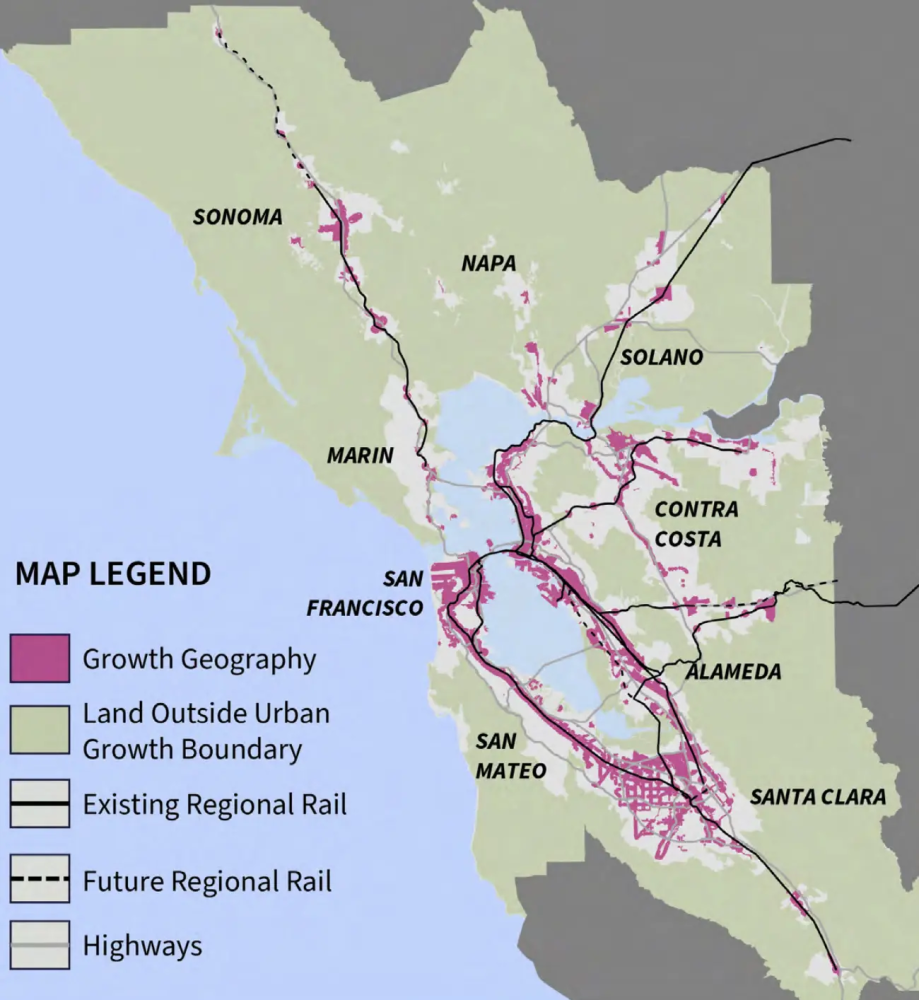
California — AB 130 (2025): CEQA infill exemption California’s 2025 AB 130 creates a targeted CEQA exemption for qualifying urban infill housing projects, substantially reducing environmental-review risk and litigation exposure for certain multifamily developments — a major accelerator for infill in constrained coastal markets. Pay close attention in particular to the provision that allows the Governor to certify projects as "Environmental Leadership Development Projects." This will allow large scale private projects (at least $100 million in construction investment) that align with the CEQA framework to benefit from faster timelines. For example, Plan Bay Area, focuses 95% of new households and over 70% of new jobs into places close to transit and prioritized for future growth. See map below.
Plan Bay Area 2050+
Arizona — Middle-housing municipal adoptions (2025 implementation activity) Arizona’s middle-housing framework (state law) required many cities to adopt ordinances enabling duplexes, triplexes, and fourplexes; 2025 was the year many Arizona municipalities completed hearings and adoptions to meet implementation deadlines. For builders, this unlocks “gentle density” in neighborhoods previously limited to single-family homes. Arizona has not passed on a state wide basis, any major new build rezoning programs just yet. However, the HB 2110 amends Arizona's Statute 9-462.10 in that population sizes of 150,000 +, must establish objective standards to allow multifamily residential or adaptive reuse on up to 10% of existing commercial, office or mixed-use buildings without a rezoning application. This will allow redevelopment to parcels of at least one acre, but not to exceed twenty acres in size. Arizona is in the process of changing this last statute, always check their gov website for the most up to date passes in revisions.
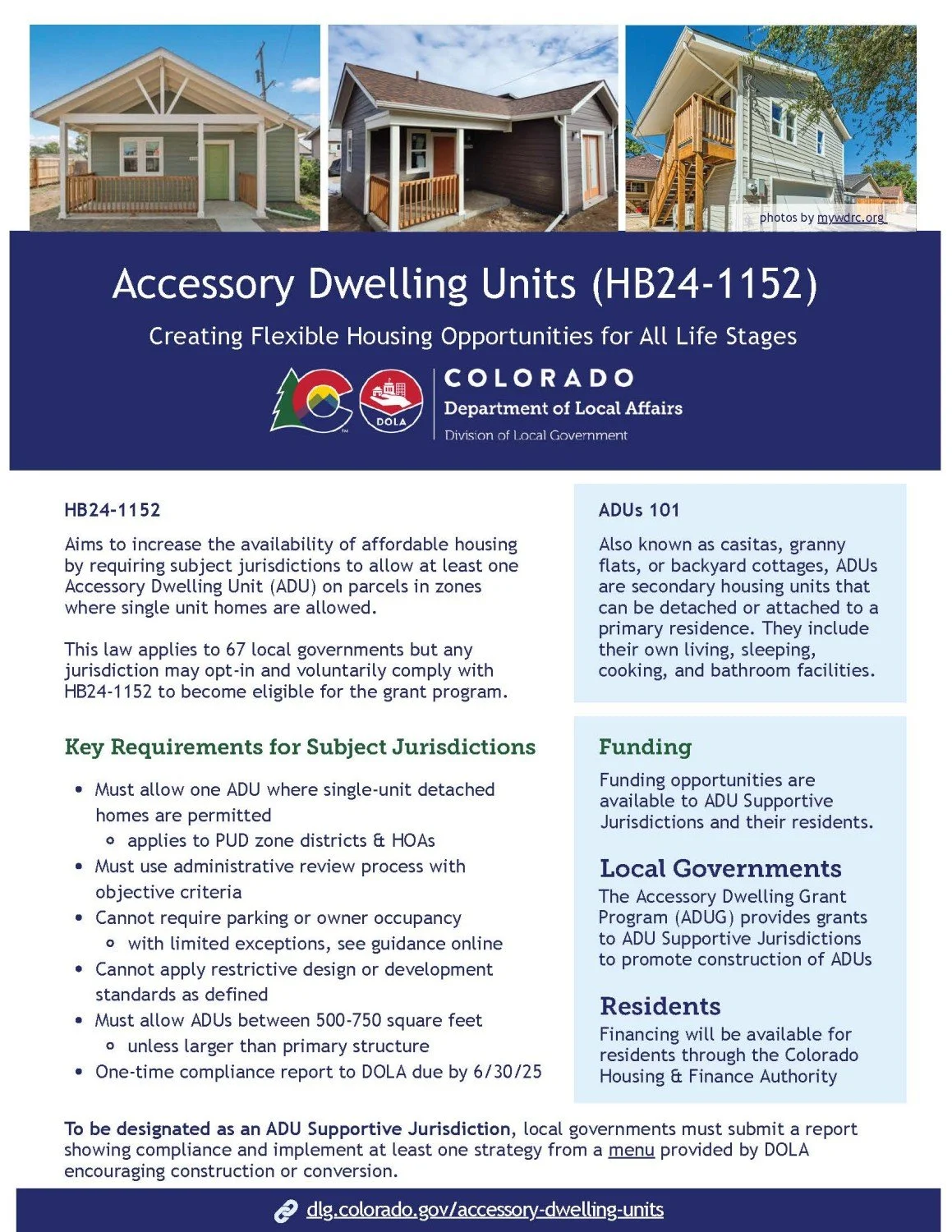
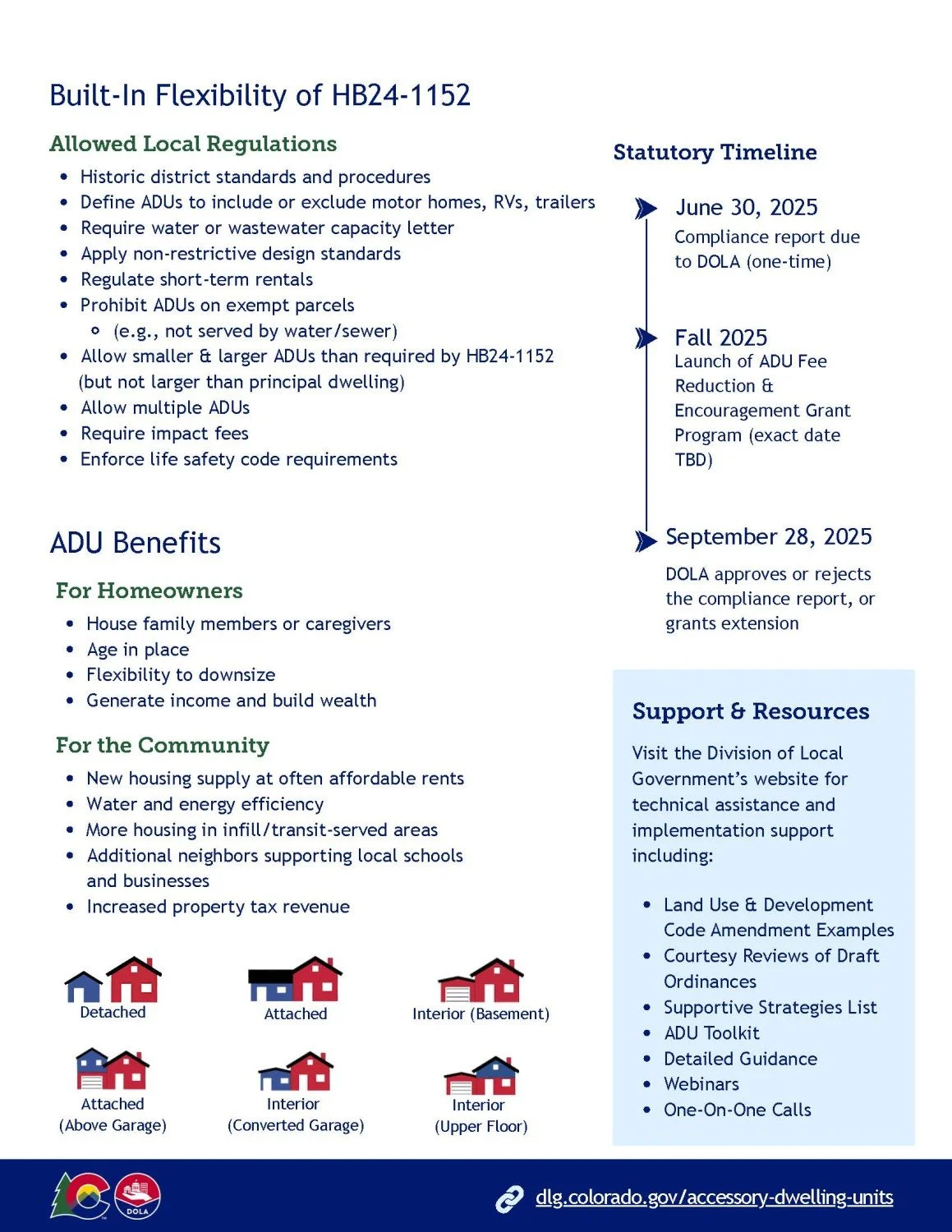
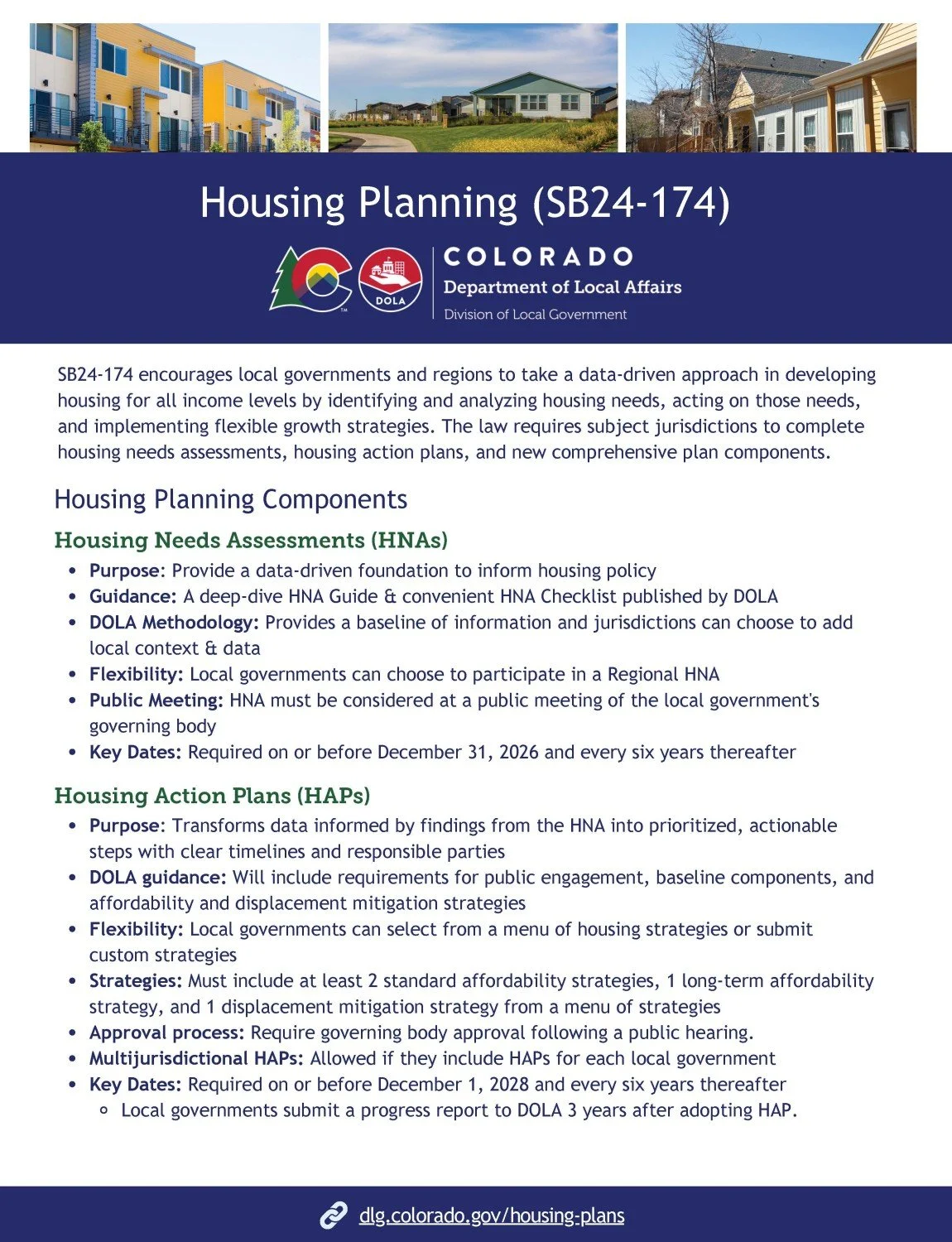
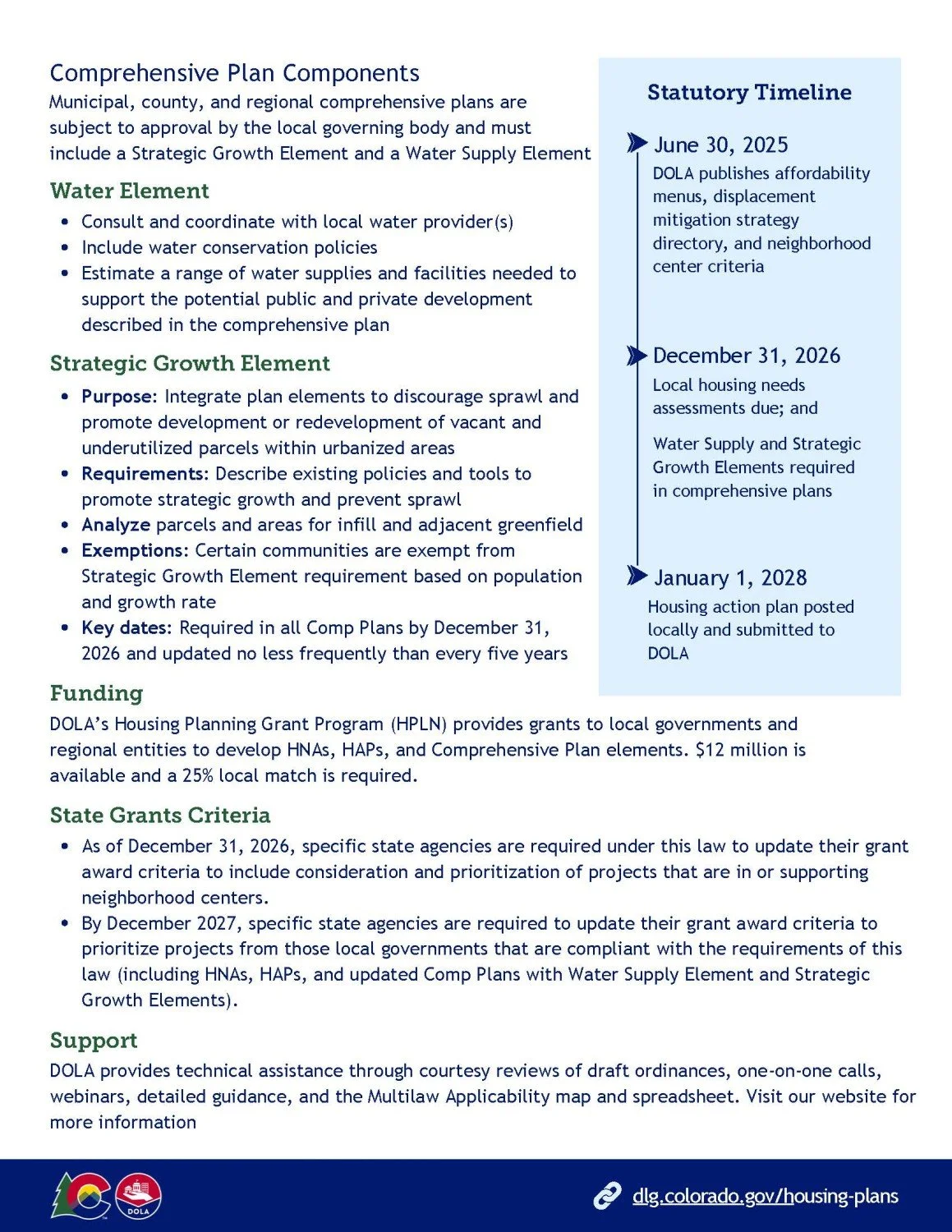
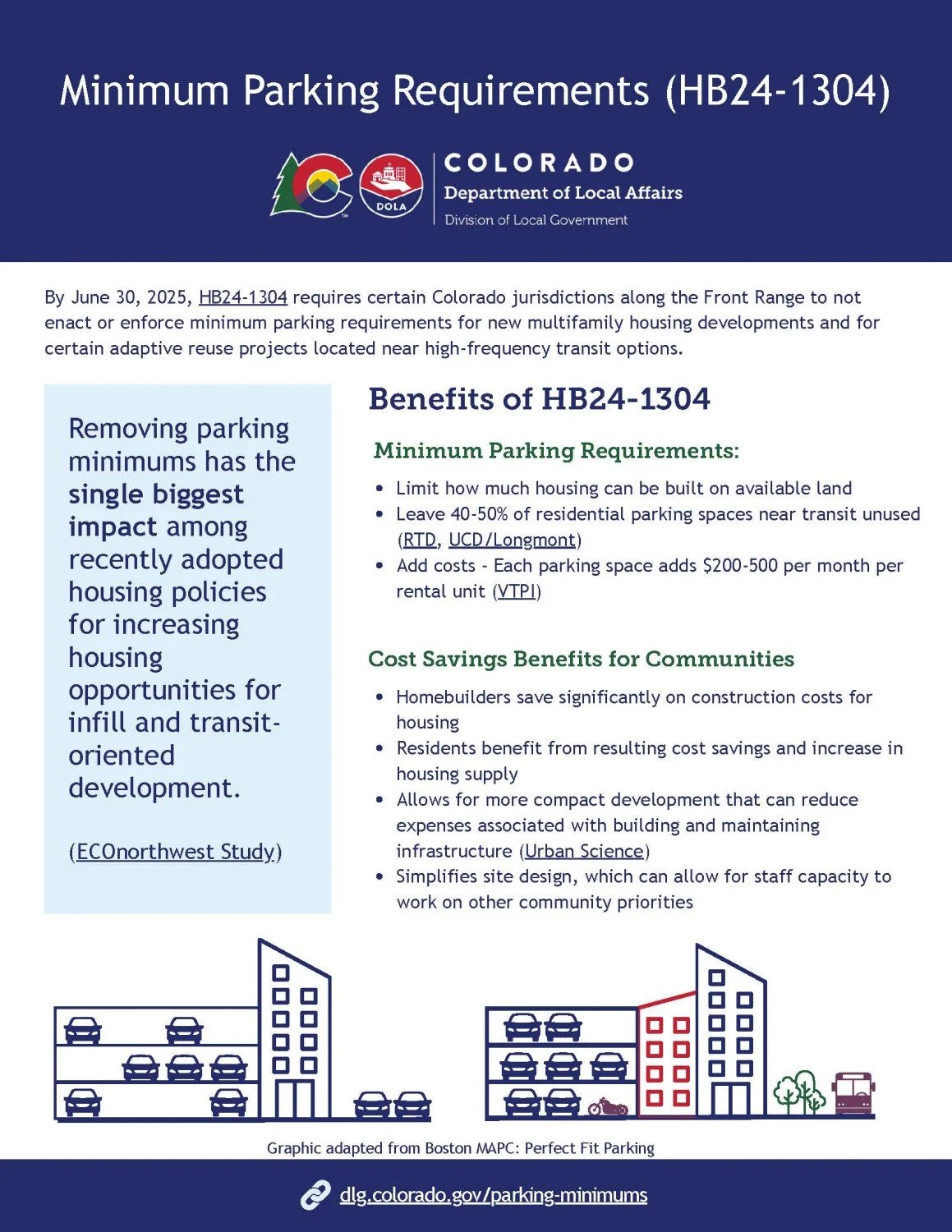
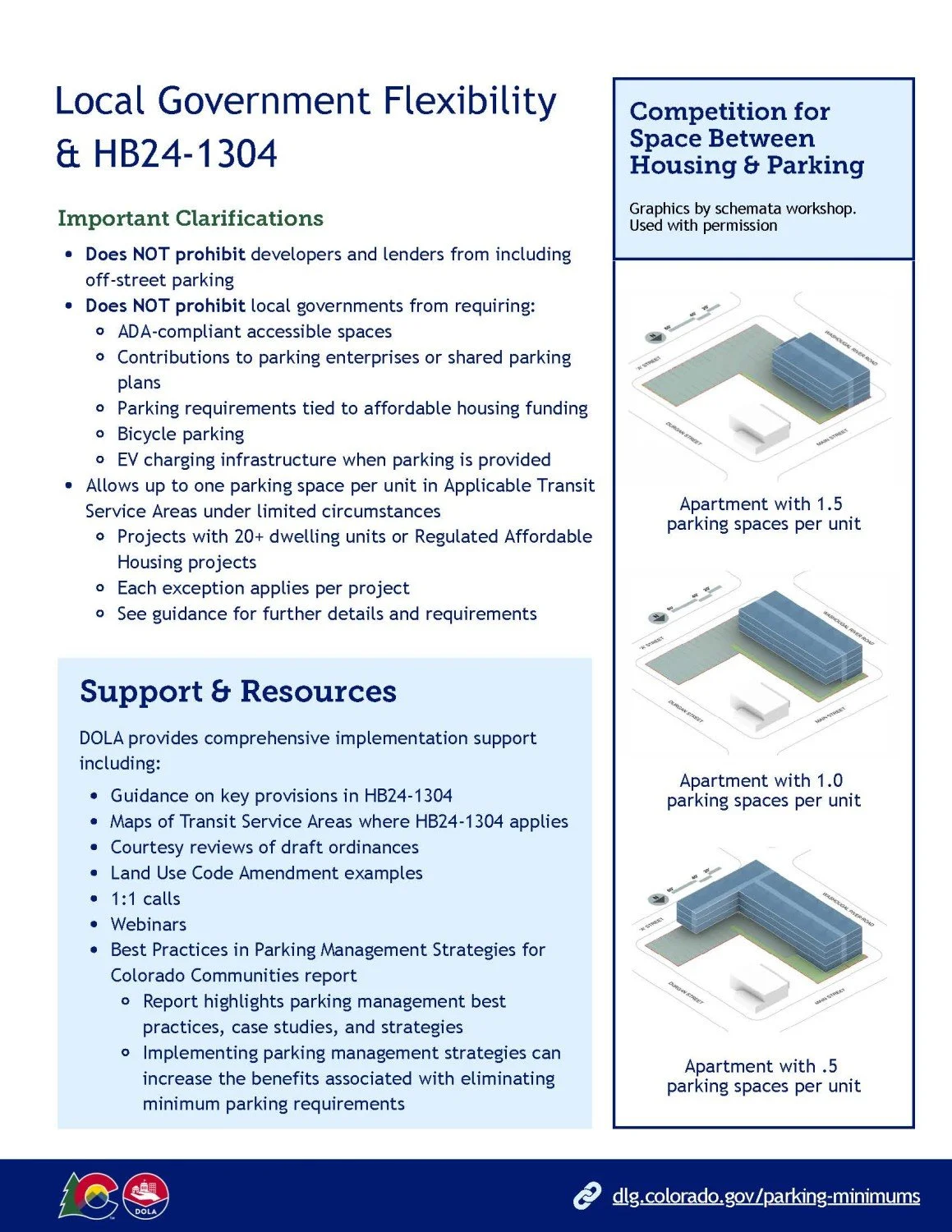
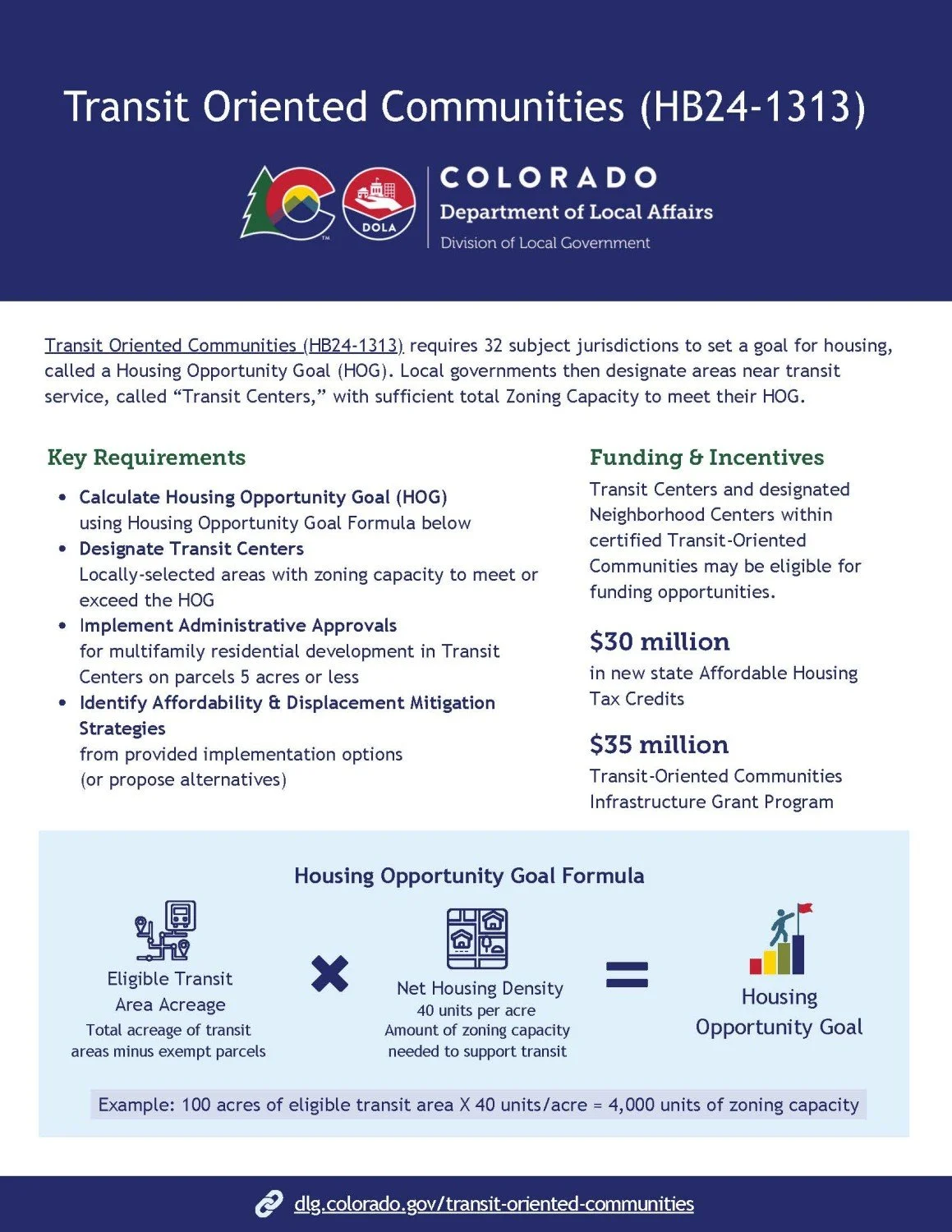
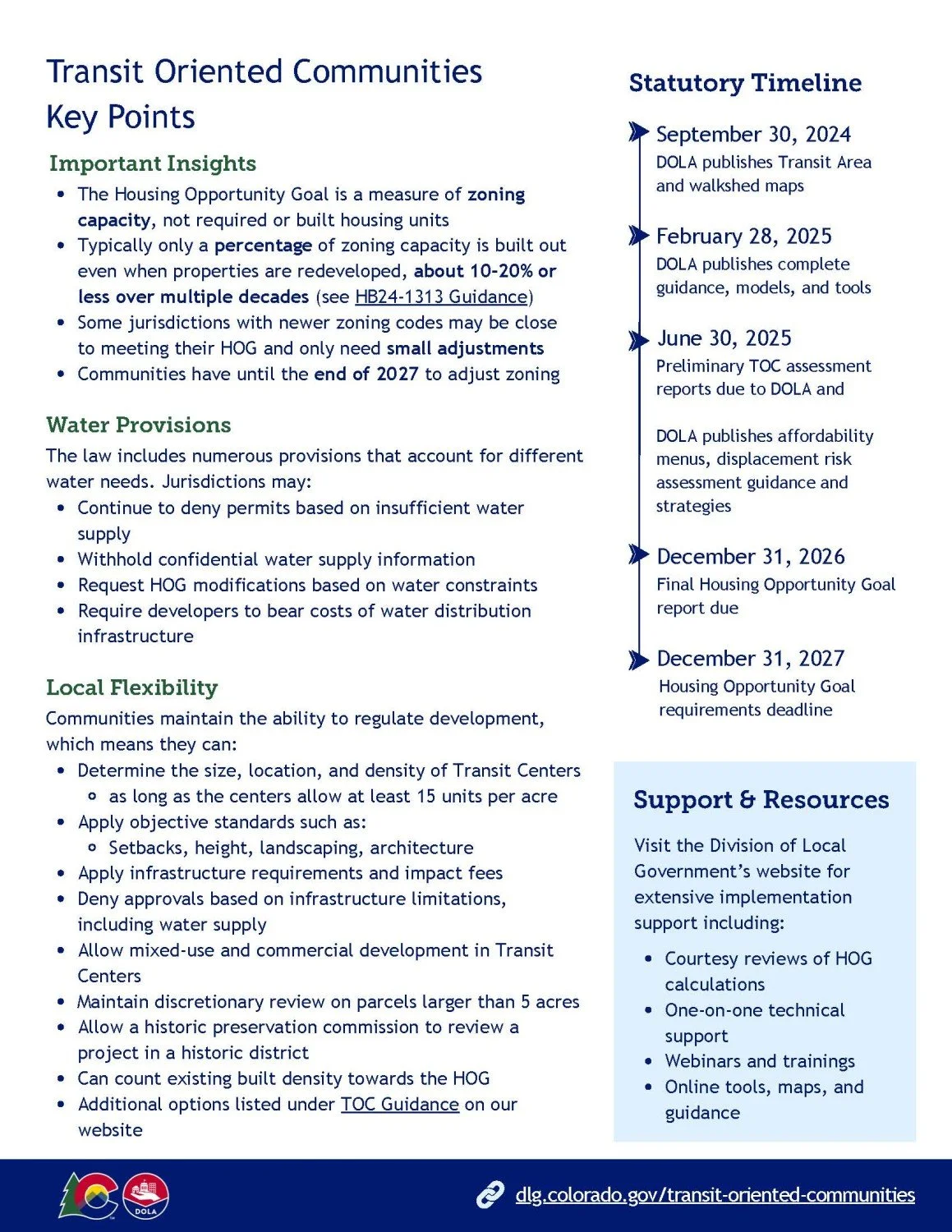
Colorado — 2024–25 housing package implementation (ADUs, density near transit) Following Colorado’s 2024–25 housing package (including HB24-1152), 2025 focused on implementation guidance and local code updates to encourage ADUs and higher densities near transit, lowering local regulatory friction for smaller multifamily and accessory units. Take a look at the highlights from the 4 changes that will be sure to bring a Multifamily surge to the state.
Midwest (Minnesota, Illinois)
Minnesota — HF 4010 (multifamily statute changes; effective 2025) Minnesota’s HF 4010 introduced 2025 provisions that require municipalities to allow multifamily building types on certain commercially zoned lands and updated process standards for multifamily approvals — effectively expanding where mid- and larger-scale multifamily can be developed. Municipalities moved through their 2025 code updates to align with the new statute.
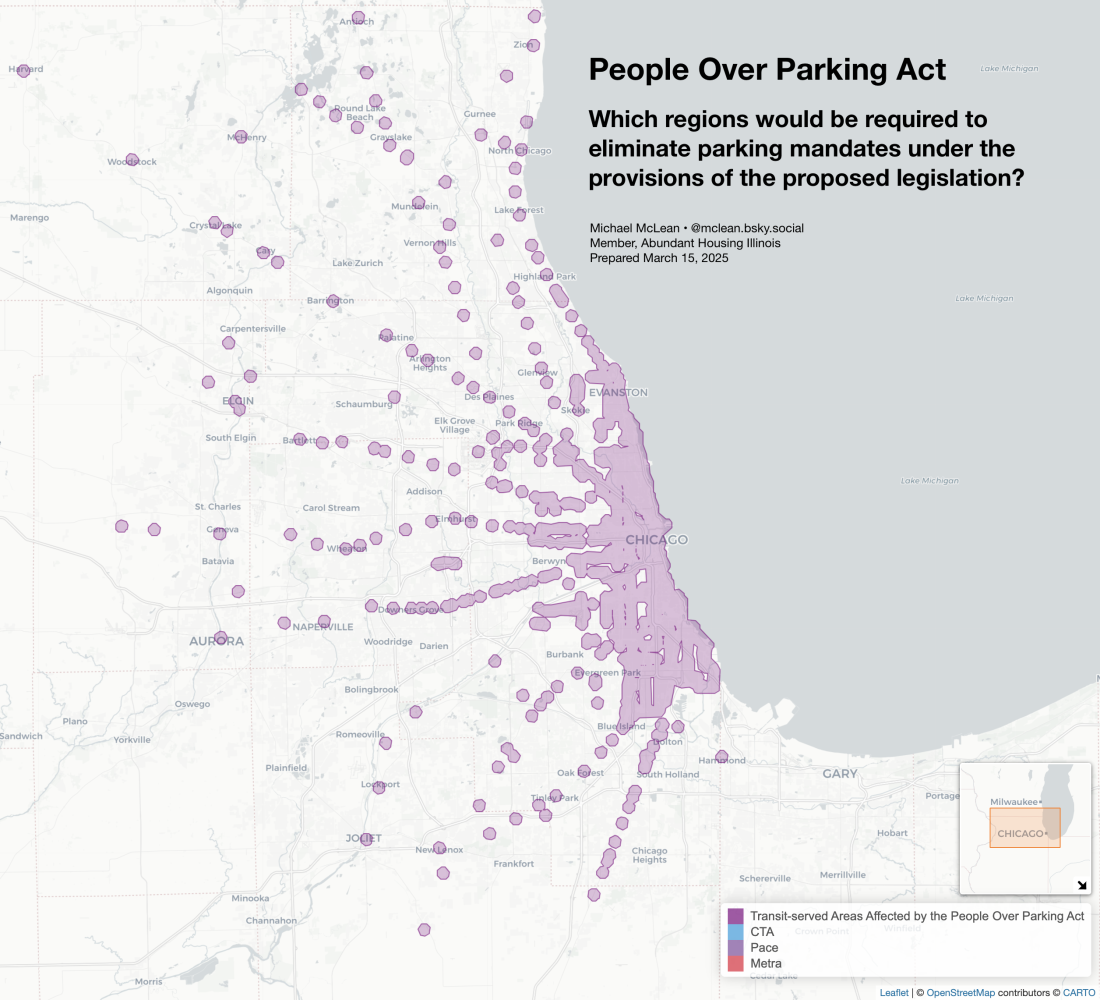
Illinois — People Over Parking Act / SB 2111 (2025 session activity). Illinois’ 2025 transit-oriented parking reforms (commonly referenced as People-Over-Parking provisions) restricted local minimum parking requirements near transit hubs and corridors. Eliminating parking minimums near transit materially lowers per-unit costs and enables smaller, denser multifamily footprints in walkable locations. The reform states that as long as the development is within one-half mile of a public transportation hub, local jurisdictions cannot require parking. Below is a map of Chicago and the surrounding suburbs that are affected by this change.
South (Texas, Florida)
Texas — SB 840 (2025): mixed-use & commercial-to-residential conversions Texas’ SB 840 (2025 session) clarifies and in some cases requires municipal approaches to permit mixed-use and multifamily conversions of commercial/office properties, easing conversion pathways and expanding the universe of parcels available for multifamily redevelopment. Many Texas cities began adopting implementing code amendments in 2025. Expect adaptive reuse projects to surge in major cities in this state.
Florida — SB 943 / Live Local Act updates (effective 2025) Florida’s Live Local Act received clarifying and strengthening amendments in 2025 (effective dates and guidance published mid-year). The 2025 updates clarified when municipalities must allow multifamily or mixed-use on commercially zoned land — particularly where affordability conditions are met — and streamlined approvals for qualifying projects. See the general bill that was signed in as effective 7/1/2025 regarding Affordable Housing. CS/CS/SB 1730. This allows for the development of housing to be approved that is affordable on ANY parcel owned by religious institutions. Take a look below of the most recently updated map to see the areas that are taking advantage of the Live Local Act in Florida.
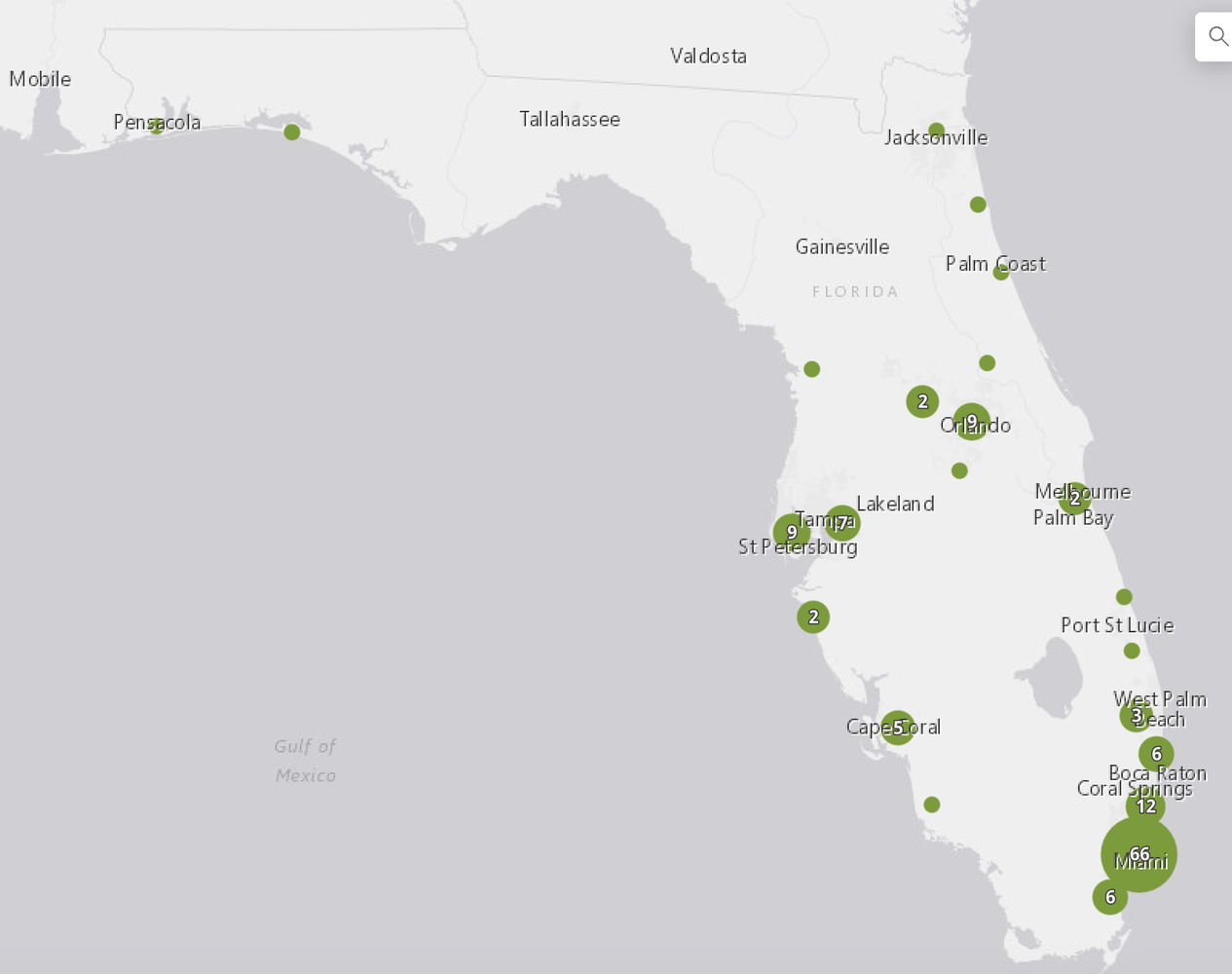
Live Local Act Mapping as of November 13, 2025.
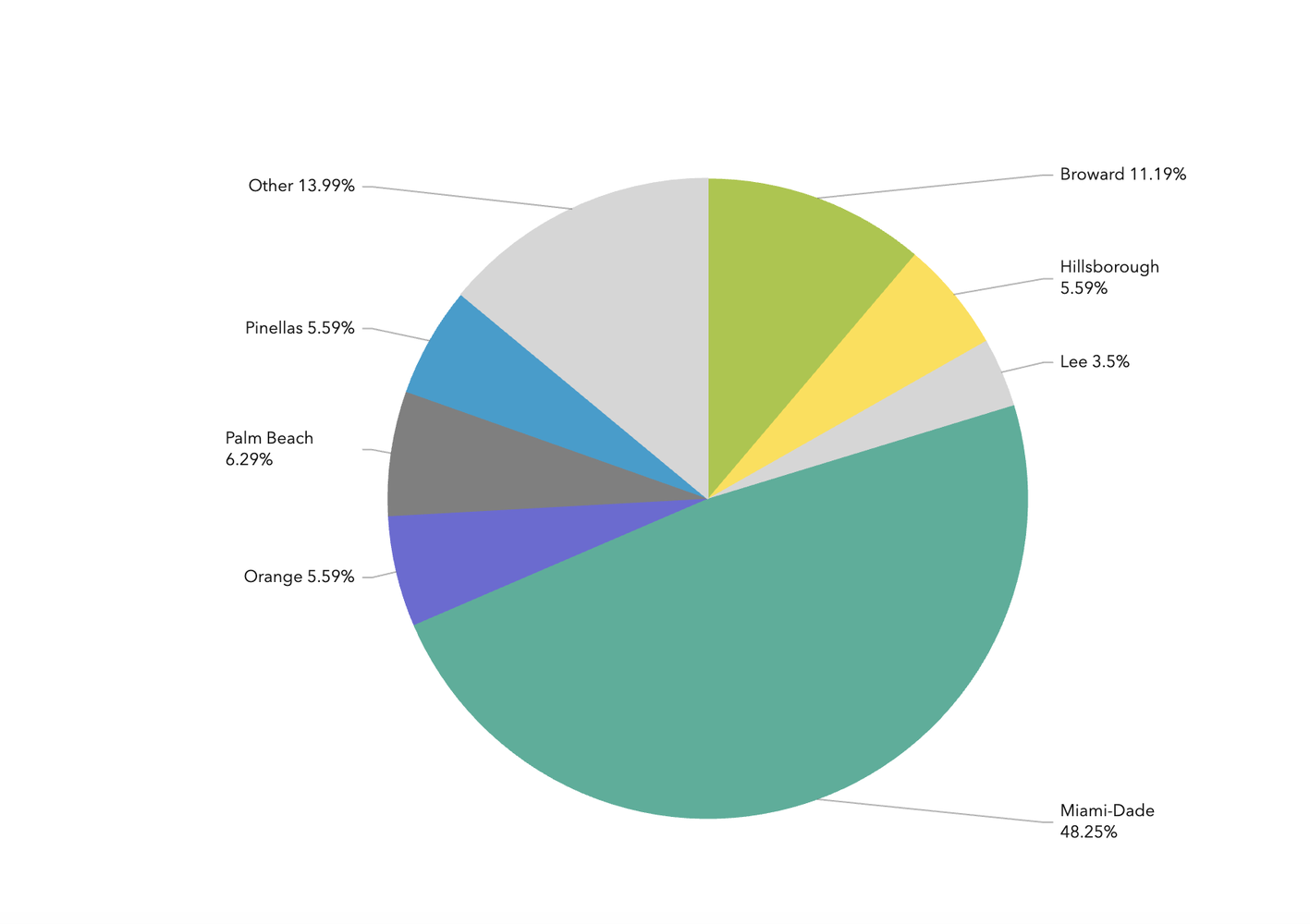
County distribution of developments from Live Local Act Mapping as of November 13, 2025.
The Spotlight: Mid-Size Cities where 2025 rezoning activity will likely funnel multifamily development.
Taking a look at Mid-Size Cities and the changes in terms of rezoning. These smaller cities should not be overlooked by multifamily housing developers. After taking a look below at some rezoning highlights throughout the country, there are three main points to evaluate for why they matter.
Lower base land and construction costs compared with coastal super-metros often make small/mid-rise multifamily feasible at lower rents.
2025 municipal code changes in these cities focused on middle-housing, corridor upzoning, ADU/lot-split clarity, and commercial-to-residential conversions — all practical, relatively low-friction paths to add units.
Faster entitlements (by-right allowances, CEQA-style exemptions elsewhere, tax abatements) reduce holding and soft costs, so development can scale faster.
Fort Collins, CO — Land Use Code updates for commercial corridors (2025 implementation work)
What changed: Fort Collins moved forward in 2025 with Land Use Code amendments focused on commercial corridors and centers to encourage mixed-use and housing near frequent bus service (part of a multi-year Land Use Code modernization). Why it matters: Corridor-focused upzoning and clearer standards for mixed-use reduce conversion friction on commercial parcels — a cost-effective path to mid-rise or stacked-flat multifamily where rents support development. Official source: City Land Use
Madison, WI — “Housing Forward” / missing-middle zoning package (2025 adoptions)
What changed: Madison’s 2025 Housing Forward package updated zoning across the city to allow duplexes/two-flats and other missing-middle types in many residential neighborhoods; council votes on key packages occurred in 2025. Why it matters: Madison offers strong university/employment demand but lower land/construction costs vs. coastal metros — zoning changes make smaller multifamily projects financially feasible and quicker to entitle. Official source: City “Housing Forward” pages
Richmond, VA — “Code Refresh” rezoning & citywide ordinance rewrite (2025 process)
What changed: Richmond kicked off a full “Code Refresh” in 2025 (zoning ordinance rewrite and parcel remapping) to modernize rules, add new mixed-use categories, and remove exclusionary legacy rules. Why it matters: Comprehensive code rewrites are rare but powerful — they can turn previously off-limits parcels into buildable multifamily sites overnight once mapped; Richmond’s lower land cost and regional growth profile make it a candidate for fast multifamily activity. Official source: Richmond Code Refresh project page
Tulsa, OK — corridor & site-specific mixed-use rezoning activity (2025 TMAPC cases)
What changed: Tulsa’s planning commission and council handled multiple mixed-use rezoning and comp-plan amendment applications in 2025, approving corridor upzones and site rezonings that enable duplexes and small multifamily on formerly single-use lots. Why it matters: Tulsa provides lower construction and land costs with active entitlement wins in 2025 — an attractive combination for developers looking to scale mid-rise or adaptive reuse projects. Official source: Tulsa planning commission agendas and reports
Cambridge, MA — citywide multifamily zoning (adopted Feb. 10, 2025) — Northeastern example
What changed: Cambridge voted to adopt two citywide multifamily zoning petitions on Feb. 10, 2025 — allowing multifamily citywide, removing many minimum lot sizes, and setting story/height-based regulation rather than exclusionary single-family rules. Why it matters: While Cambridge is an expensive market in absolute terms, the policy is a high-signal example: citywide legal clarity and by-right paths for 3–6 story multifamily remove big entitlement risk — an example smaller Northeastern cities are watching and emulating. Official source: Cambridge Community Development Department adopted petition documentation and ordnance PDFs
The Magiglide Insight newsletter is designed to keep you connected to the latest trends and reforms shaping multifamily housing developments across the U.S. If you’d like to learn more about how our durable Magiglide Closet System can enhance your next multifamily project, feel free to reach out.
Until the next door opens,
Tracy
Website: Magiglide Closet System
Email: TracyK@landquist.com