Code-aligned, budget-conscious, and built for Ohio multifamily projects from schematic design through construction.
Aligned with Ohio Building Codes
Optimized for multifamily units
Used in market-rate and luxury housing
The Multifamily Closet Door
for Architects in Ohio.
WHAT MATTERS IN OHIO
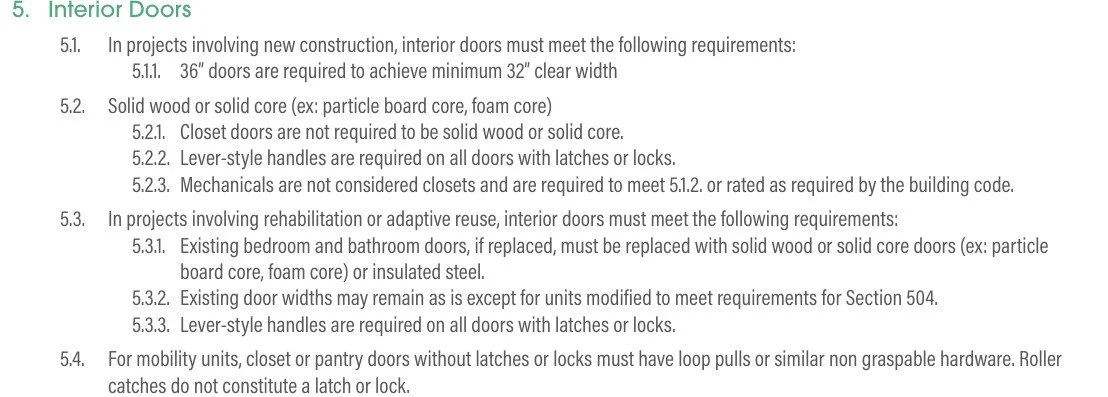
5. Interior Doors
5.2 Solid wood or solid core (ex: particle board core, foam core)
5.2.1. Closet doors are not required to be solid wood or solid core.

Building Code Snapshot
This state follows the 2024 Ohio Mechanical Code. In terms of closet doors, this means that you must have 100 square inches of free air behind a closet door with a dryer producing over 200 cfm.

IMC 2021 Amended
504.7 Makeup air.
Accessibility
The state of Ohio has a website through OHIO HOUSING FINANCE AGENCY - DESIGN & ARCHITECTURAL STANDARDS
https://ohiohome.org/ppd/documents/DesignArchitecturalStandards.pdf
Climate Performance and Material Stability
Closet doors in multifamily environments must perform consistently across varying humidity levels, seasonal changes, and interior climate conditions. Our door systems are engineered for dimensional stability, making them suitable for projects across all U.S. climate zones- from dry to high-humidity regions.
Labor & Construction Realities
Ohio does not have a law that says union and non-union workers must always receive equal pay across all jobs.
What Ohio does have is a prevailing wage law for many public construction projects. Under that law, union and non-union workers performing the same classification of work on qualifying public projects must generally be paid the same prevailing wage rate. Those rates are often based on local union collective bargaining agreements.
The main statute is:
Ohio Revised Code Section 4115.05 - Ohio Revised Code | Ohio Laws
Key language from the statute states that workers on public works projects must be paid “not less than the prevailing rate of wages” in that locality.
This applies to:
State-funded or public improvement construction projects
Union and non-union contractors alike
Trades such as carpenters, electricians, laborers, plumbers, etc.
Ohio also has a separate equal pay law prohibiting wage discrimination based on protected classes such as sex, race, religion, age, and national origin:
Ohio Revised Code Section 4111.17 - Ohio Revised Code | Ohio Laws
But that law is about discrimination protections — not union versus non-union status.
So, in practical terms:
Private sector jobs: employers may legally pay union and non-union workers differently.
Public prevailing wage projects: union and non-union workers generally must receive the same prevailing wage for the same classification of work.
What does this mean for our Magiglide Closet Doors?
Our closet doors are not difficult and do not require an extra skill set in order to be installed correctly. At Landquist, we do not have installers; the GC team, door supplier/distributor, typically will complete the installation of the closet door.
Click on our GC webpage link to see installation instructions in multiple languages, as well as how-to videos and videos for a visualization.

Predesign
Budget Numbers.
Contact us today by requesting a quote. We can provide budget numbers for early planning by clicking the Request a Quote button, which brings you straight to estimating.
VE Guidance.
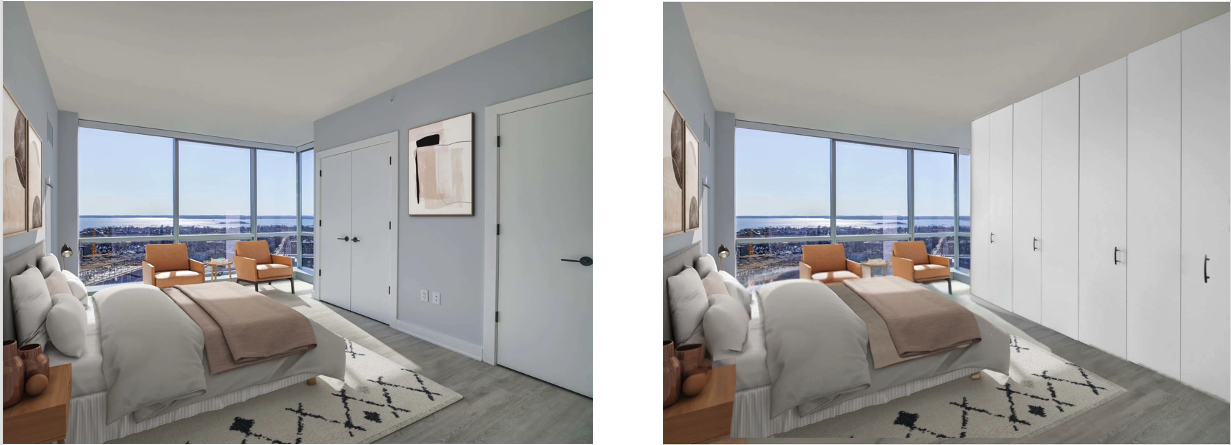
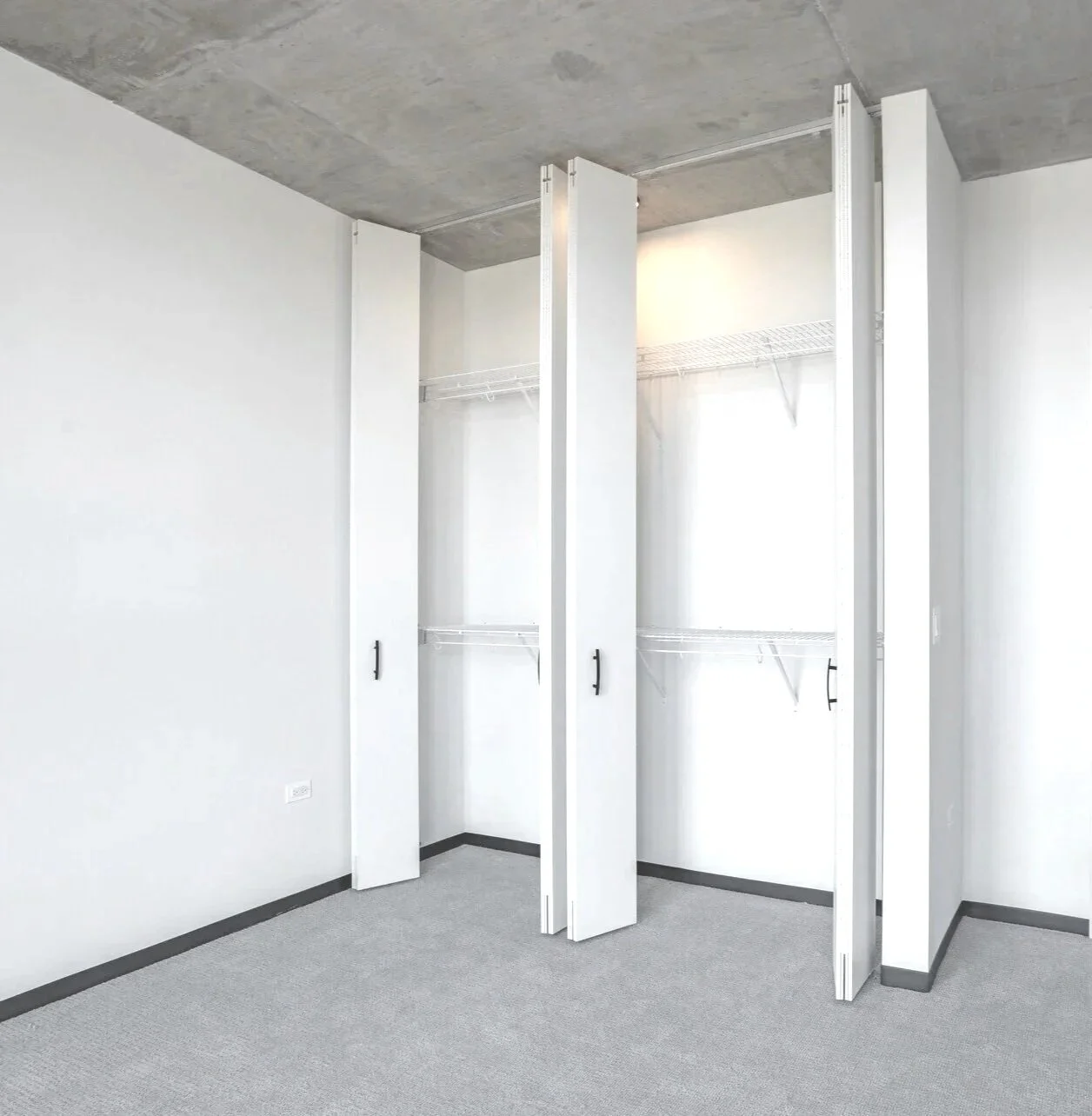
This is the time to think about the considerations of utilizing Magiglide closet doors to their full capabilities. The closet door system is the same cost to be 8 ft tall, as it is to be 6’8” tall. Because of this, it makes sense not to drop a header and have that closet door go floor to ceiling. This will not only optimize the closet storage space, but will also make for a quicker timeline on the project’s drywall and casing portion. The closet doors also do not require stub walls to hold the closet door opening at a certain size.
The 2-panel Magiglide bifold closet door is manufactured anywhere from 18”-48”, to the nearest 1/4” in width. This allows for specialty sizing without specialty costs.
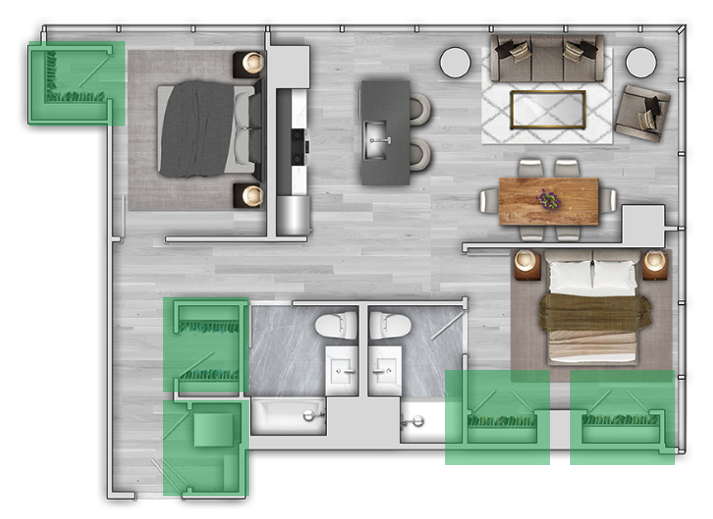
Take a look below at the visualization as well as the floor plan rendering for 3 different unit options for closet doors.
As Is. (Option 1)
Floor Plan, see the highlighted closet door openings. We would suggest putting the Magiglide closet systems here.
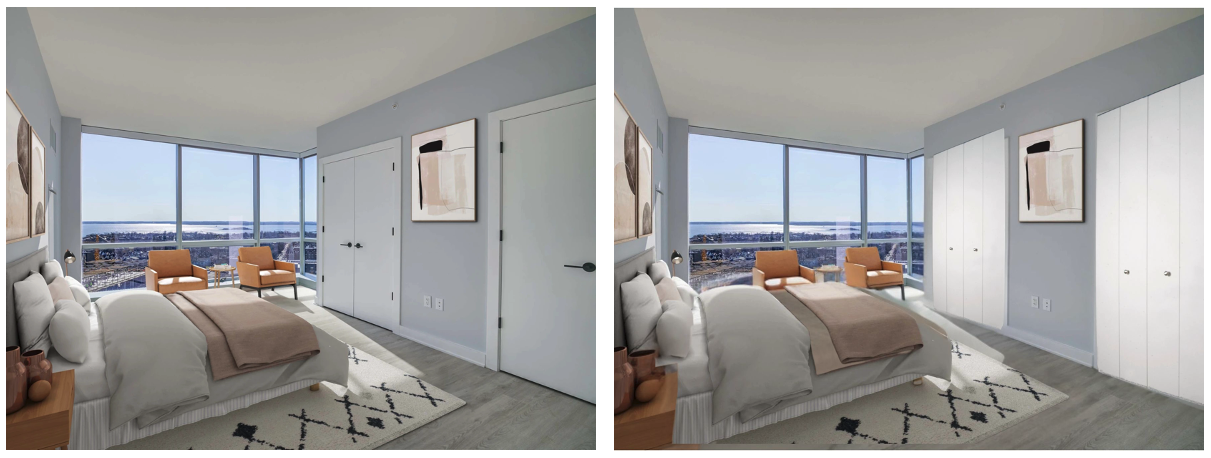
Floor Plan, stub wall deletion.
The Magiglide Closet Door System doesn’t require you to hold your stub wall openings. Making the blueprint to match, with a visualization of the rendering with no stub walls.
Tip* With walk in closets, keep enough of the stub wall to hold the closet shelf on the inside of the opening.
Stub Wall Deletion. (Option 2)
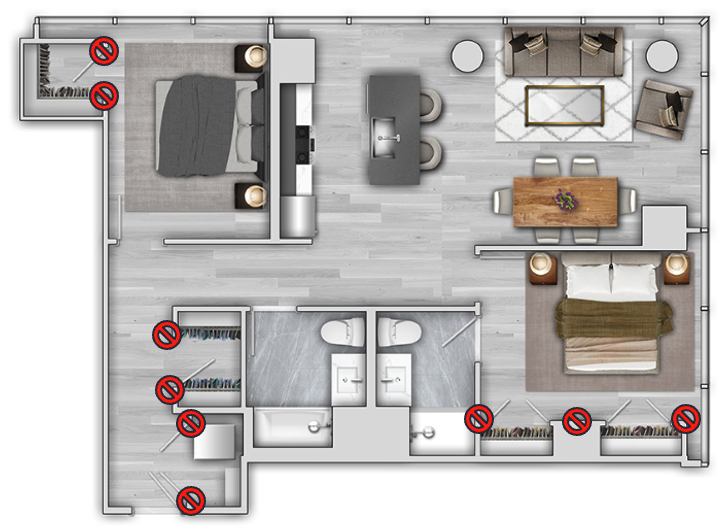
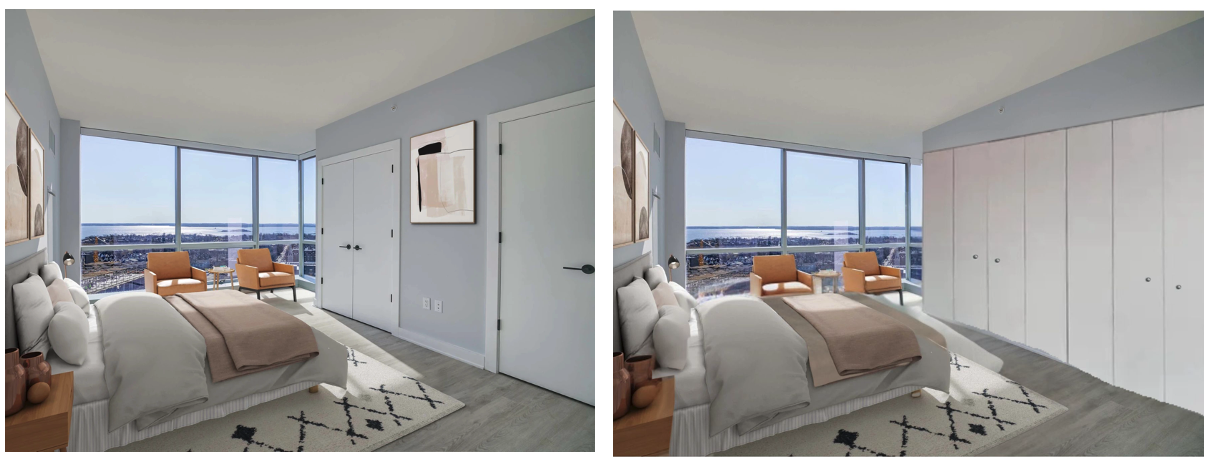
Stub Wall and Header Deletion. (Option 3)
Floor Plan, stub wall, and header deletion.
The Magiglide Closet Door System doesn’t require you to hold your stub wall openings or drop a header. Making the blueprint to match, with a visualization of the rendering with no stub walls or headers.
Tip* With walk-in closets, keep enough of the stub wall to hold the closet shelf on the inside of the opening.
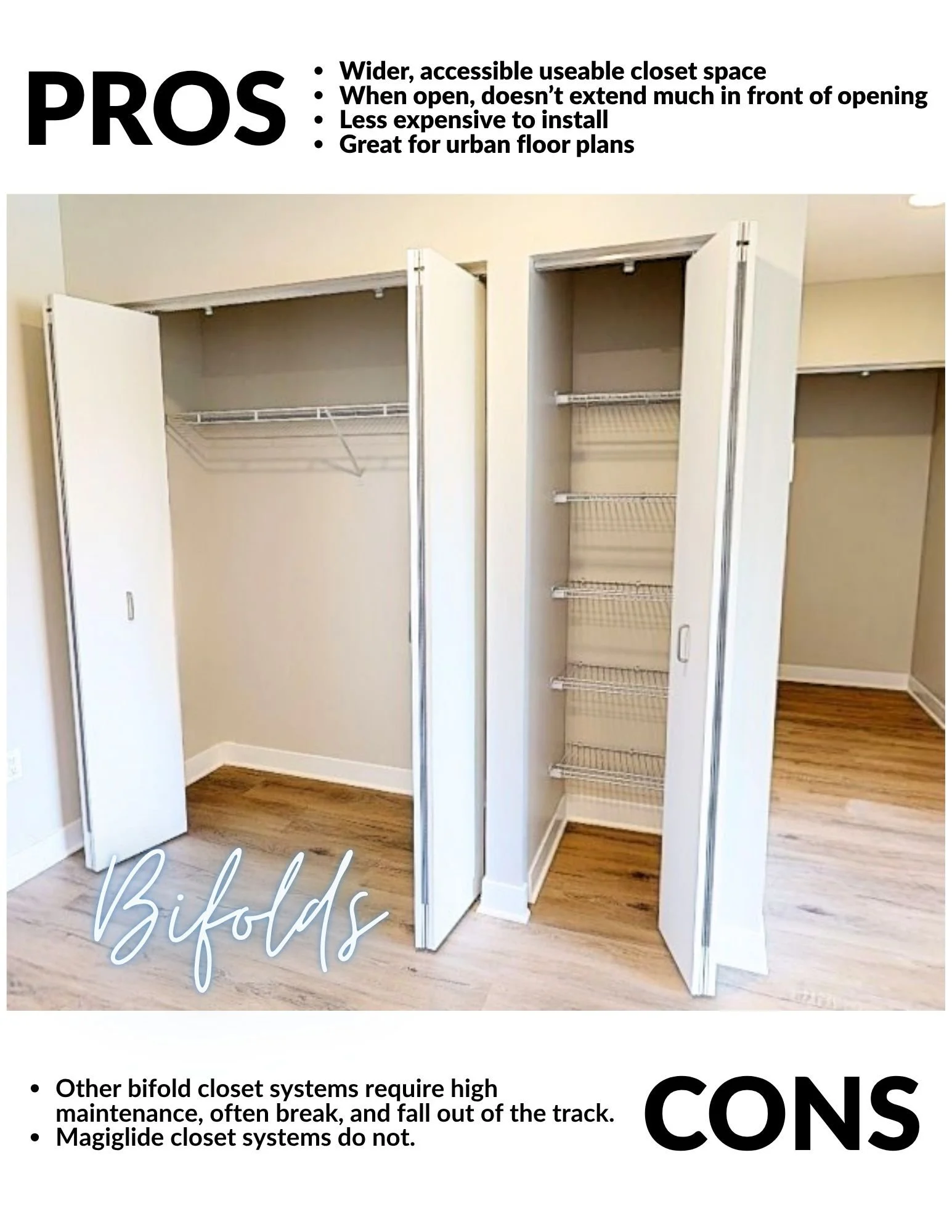
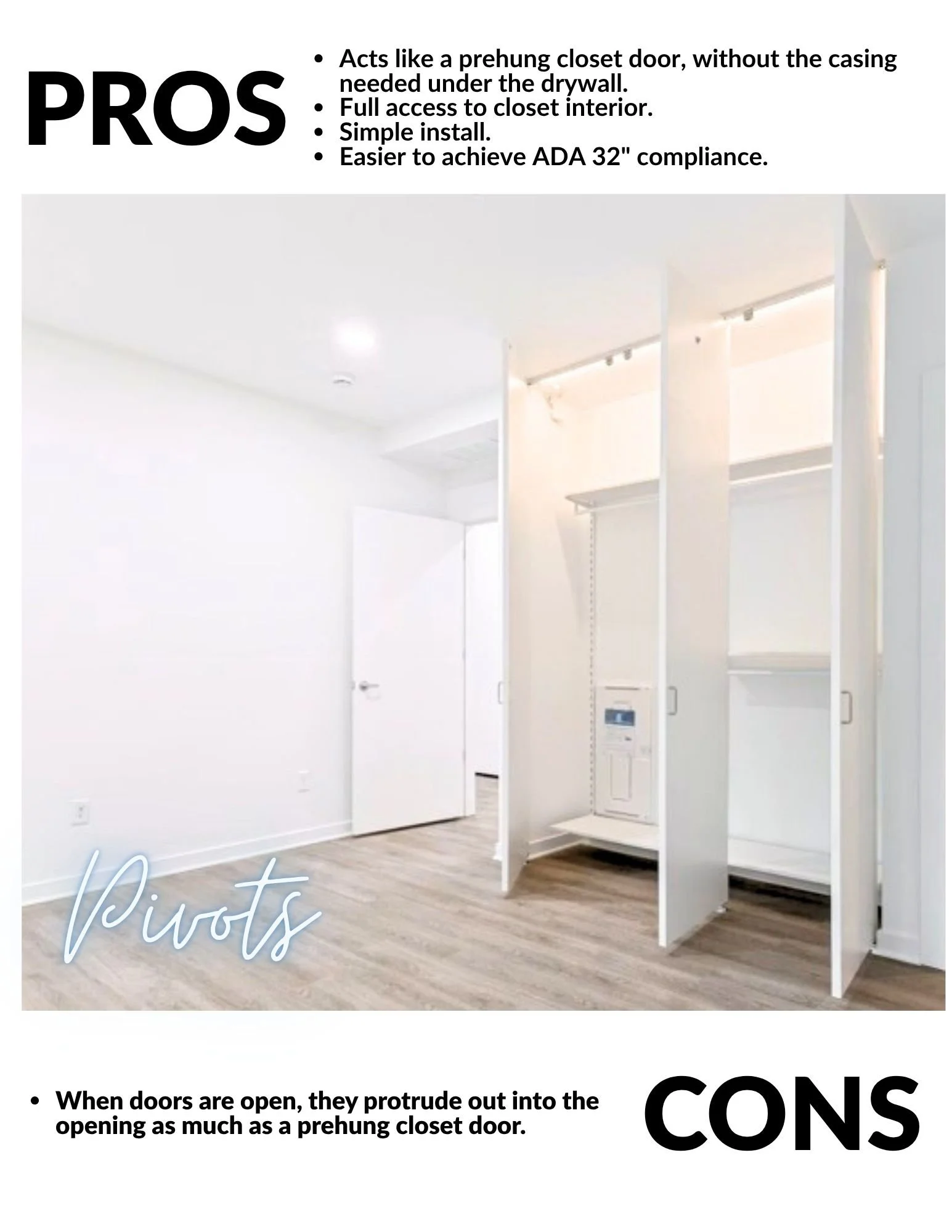
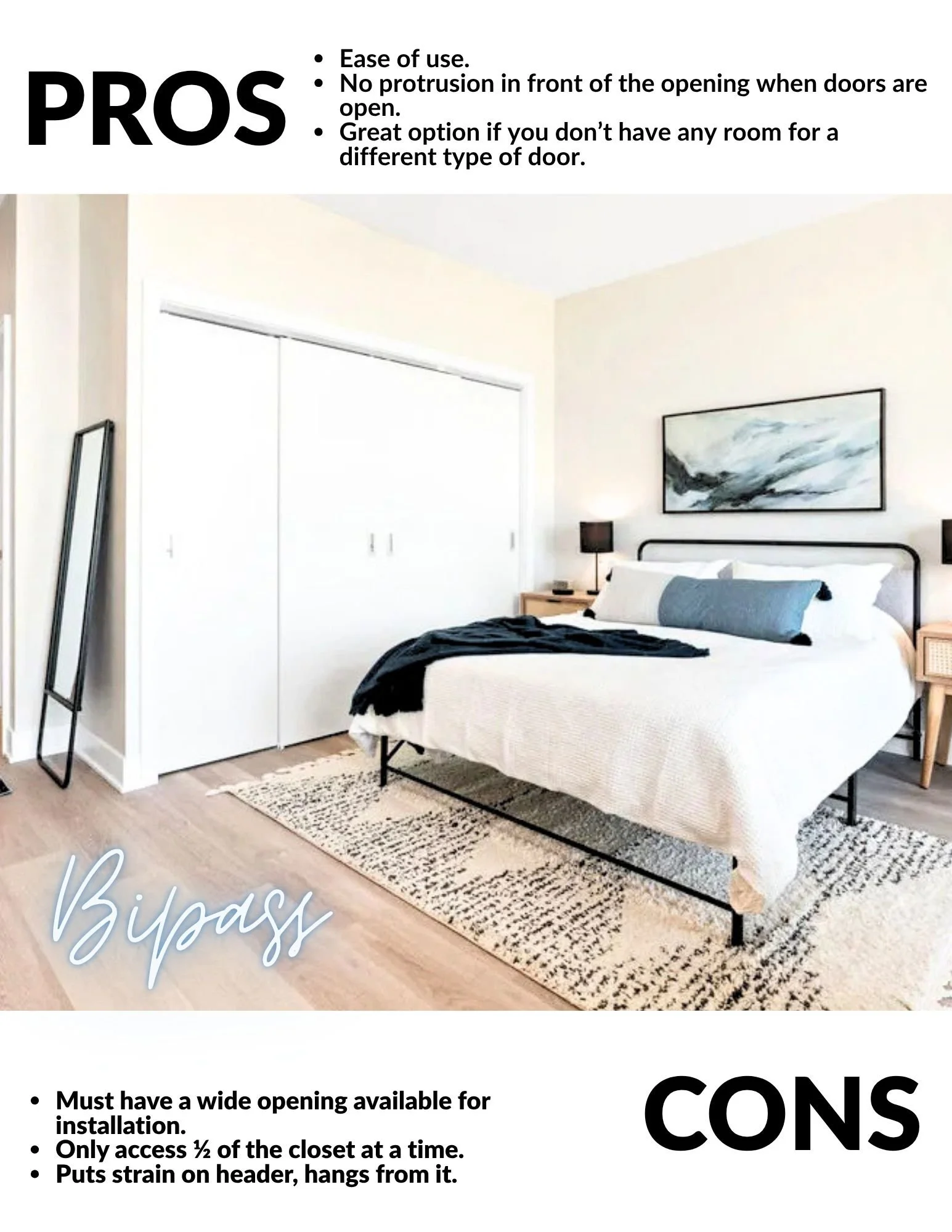
Bifold-Pivot-Bipass Comparison.
Each type of closet door has pros and cons. Please see below for the visual difference and information regarding these 3 types of closet doors.
Schematic Design
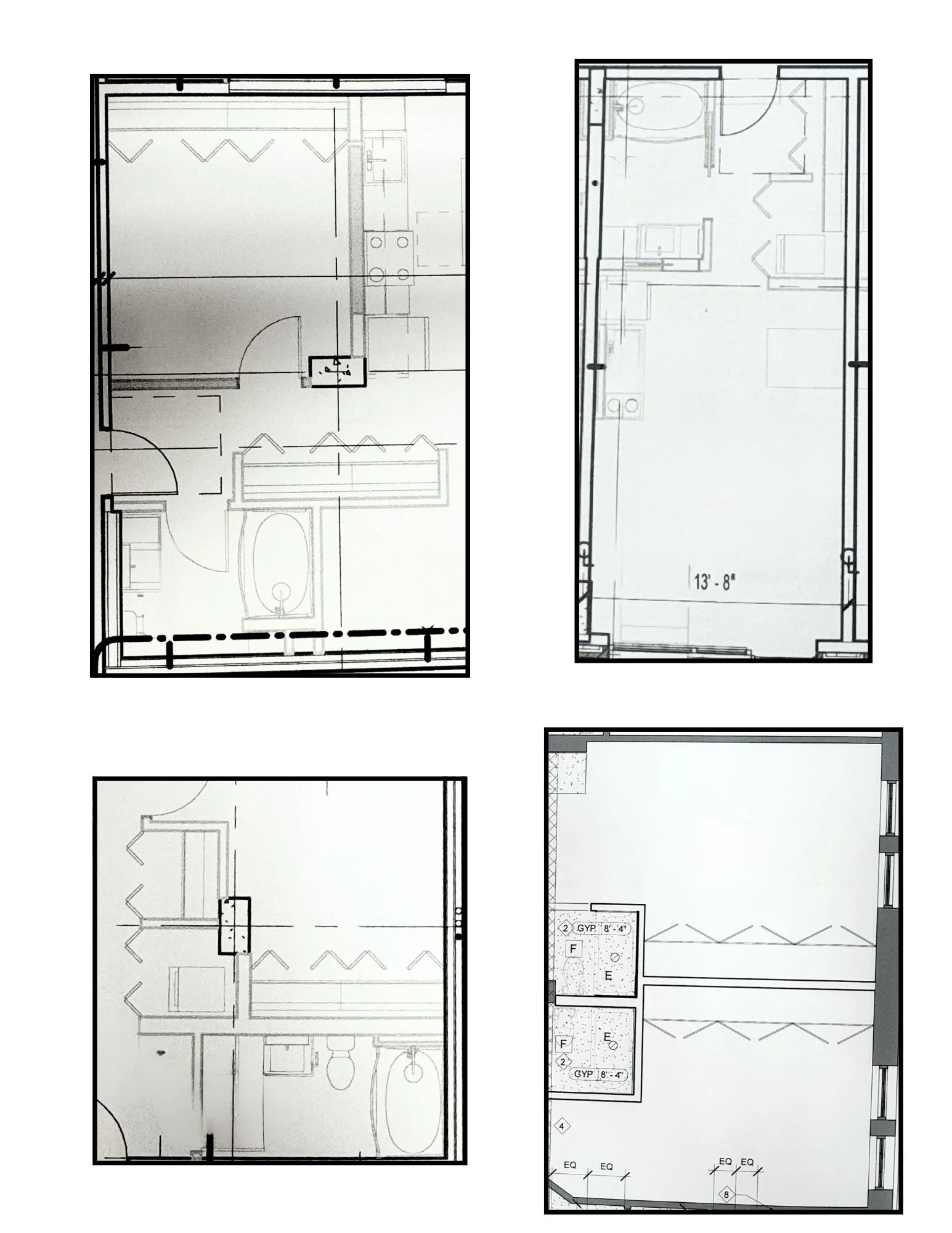
Space Saving Examples.
See below for examples showing floor plans that have been designed with our Magiglide Closet Doors to maximize the storage capabilities of the room.

Design Development
Construction

Finish Options.
Primed Paintable Melamine: Is the least expensive of finishes. It has 4 coats of resin, making it porous. If you want to paint it, you can scuff sand and do so. This finish is also fixable with wood putty if need be.
Melamine: This is slightly more in price, but has 10 coats of resin, making it not fixable or porous. It does have a slightly shinier aesthetic and is considered a fully finished product. If you plan to paint the door white, no matter the finish, it is much less costly to go with the Melamine fully finished product.
Code Compliance Summaries
The Magiglide closet door is compliant with ADA, BABAA, and many Green Initiatives.
It does not seal onto the surrounding walls, making it often times to have the ability to have enough adequate air flow without venting. To do the math, visit our air flow calculator to see how much air flow you receive depending on the size of the closet door opening.
In Ohio, you need 100 square inches of air flow behind the closet door to remain compliant.
Construction Documents
CAD/REVIT detail
Install information
General Contractor or Installer Page
Includes How-To videos, written install and measuring instructions, and an install video.
Closet Door Submittal
Upon receiving a purchase order, we will generate a submittal.
Install Video
Download the Ohio Multifamily Closet Door Spec Kit.

Why do Architects Spec Magiglide?
Reduces VE Risk
Fast submittals + support
Built for Multifamily volume
Help with Green Certifications
To have a durable product secured into their development, especially when the Owner will manage afterwards
Field Support
From drawings to install Seamless Support.